
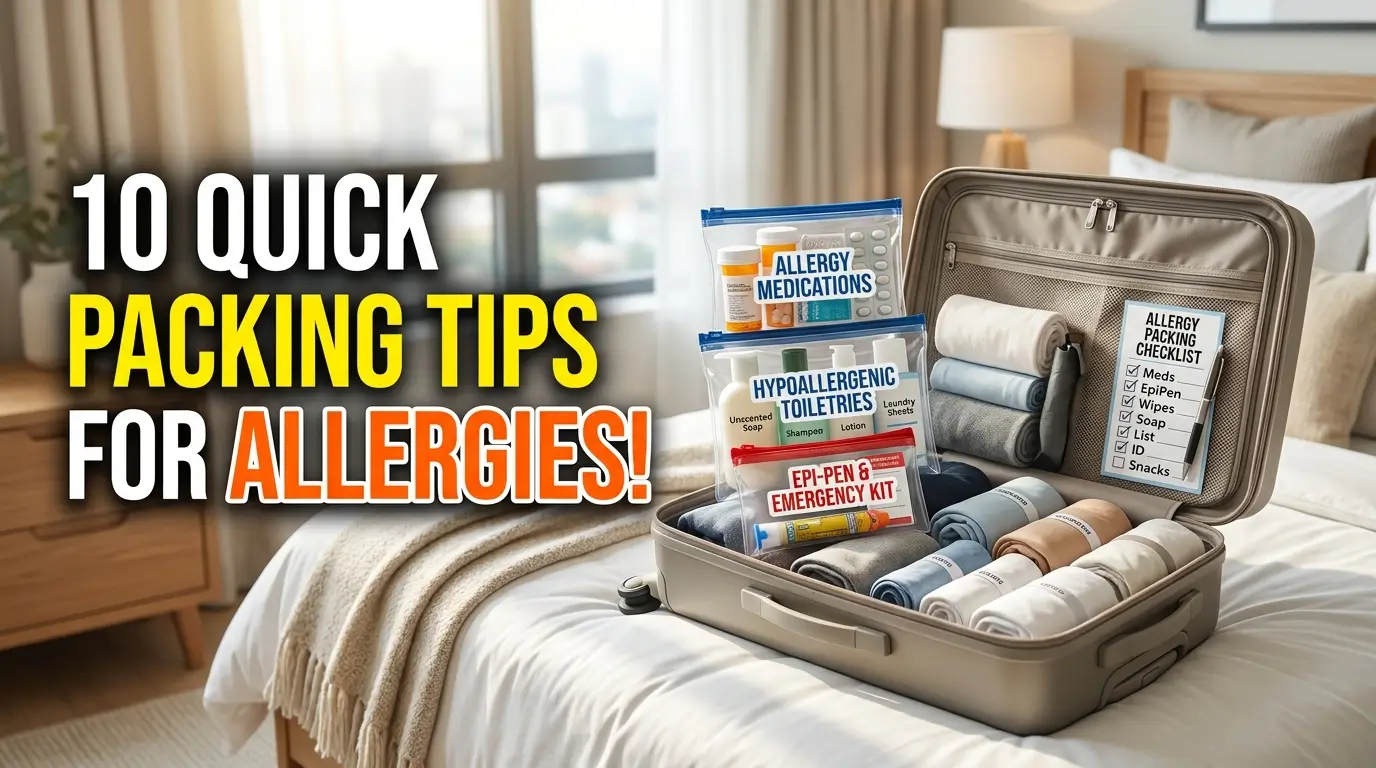
Finding genuinely useful travel packing tips for travelers with allergies that go beyond “carry your EpiPen and tell your server” is harder than it should be. I’ve managed a severe tree nut allergy and seasonal environmental allergies for fifteen years, and the gap between standard allergy travel advice and what actually prevents reactions on the road is significant enough to have sent me to a foreign emergency room once before I figured out a real system. That experience was expensive, frightening, and entirely avoidable with better preparation. Everything in this guide comes from that learning curve, applied and tested across dozens of trips since.
1. Build Your Allergy Travel Kit Before You Think About Anything Else
Every other packing decision comes after the allergy kit is sorted, not alongside it and definitely not as an afterthought. Your allergy kit is the non-negotiable foundation of any trip, and treating it with the same priority you give your passport is the mindset shift that prevents most allergy-related travel emergencies before they start.
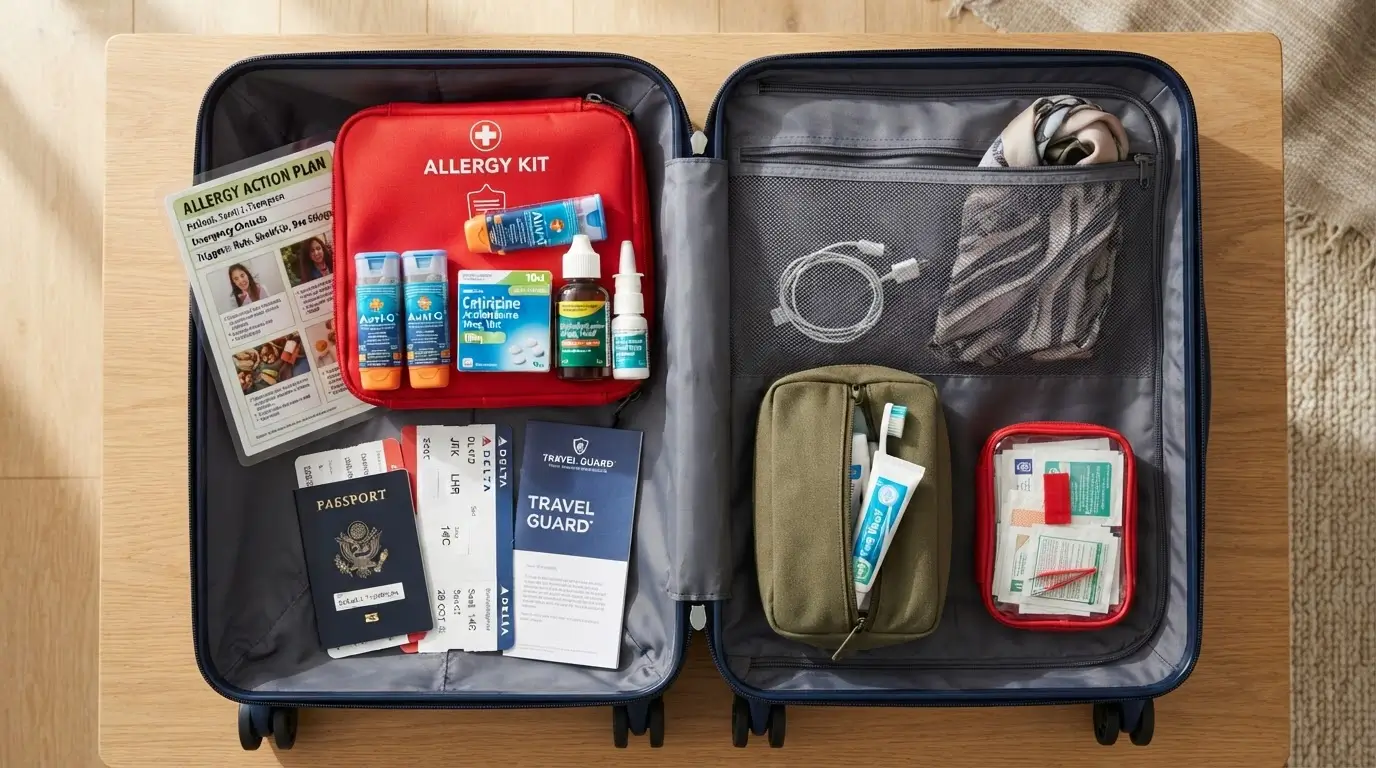
A complete allergy travel kit includes:
- Two EpiPens or equivalent auto-injectors if you have anaphylaxis risk, not one. One can malfunction, get lost, or be used in a first reaction that requires a second dose before emergency services arrive.
- Antihistamines in both fast-acting liquid or dissolvable form for immediate response and standard tablet form for ongoing management. Benadryl for fast response and a non-drowsy option like Zyrtec or Claritin for daily environmental allergy management.
- A written allergy action plan from your allergist that outlines exactly what to do at each stage of a reaction, who to call, and when to use which medication. Laminate it. Keep it in your kit.
- Nasal rinse supplies if environmental allergies are a significant factor. NeilMed makes travel-sized saline rinse kits that pack flat and work better than any antihistamine at clearing accumulated allergens after high-exposure days.
- Your allergist’s contact information and your home pharmacy’s international contact number.
All of this lives in your carry-on. Not your checked bag. Your carry-on. Every time. No exceptions.
2. Research Your Destination’s Allergy Landscape Specifically
Allergies don’t travel the same way in every country, and the specific allergen profile of your destination changes what you need to pack, how you need to communicate, and how vigilant you need to be day to day. This research takes less than an hour and changes your entire preparation strategy.
For food allergies, research how your specific allergen appears in the local cuisine. Tree nuts are a foundational ingredient in many Middle Eastern and South Asian cuisines in ways that go far beyond obvious nut dishes. Shellfish appears in broths, sauces, and dishes that don’t list it in the name throughout Southeast Asia. Sesame is used as a base oil and garnish throughout Japanese, Korean, and Middle Eastern cooking. Understanding how your allergen integrates into the food culture of your destination tells you how difficult avoidance will be and how much communication work every meal will require.
For environmental allergies, seasonal pollen calendars vary dramatically by latitude and climate. Arriving in Kyoto during cherry blossom season with a grass pollen allergy when you expected the trip to be low-pollen because it’s spring is a specific kind of miserable that advance research prevents. Pollen.com and AccuWeather’s allergy tracker provide destination-specific pollen forecasts. AirVisual tracks air quality and pollution levels in cities worldwide, which matters for travelers whose environmental allergies include urban pollution sensitivity.
3. Pack Medications in Multiple Locations and Multiple Formats
The single most common allergy travel packing mistake is keeping all medications in one bag. One bag that gets checked by mistake. One bag that gets left in a taxi. One bag that goes through security in a bin that doesn’t come out the other side. Distributing medications across your carry-on, your personal item, and your travel companion’s bag if applicable creates redundancy that saves you in exactly the moment you most need it.
Beyond distribution, format matters. Dissolvable antihistamine strips pack flat and work faster than tablets. Travel-sized nasal sprays meet the TSA 3-1-1 liquid rule without requiring checked luggage. If you use a daily allergy medication that comes in tablet form at home, ask your allergist whether a liquid or chewable version is available that absorbs faster for travel use. For international travel, carrying a generic name list of all your medications matters more than the brand names, since Benadryl is diphenhydramine everywhere but the brand name may not be recognizable or available in a foreign pharmacy when you urgently need a replacement.
4. Create Allergy Communication Cards in Every Language You’ll Need
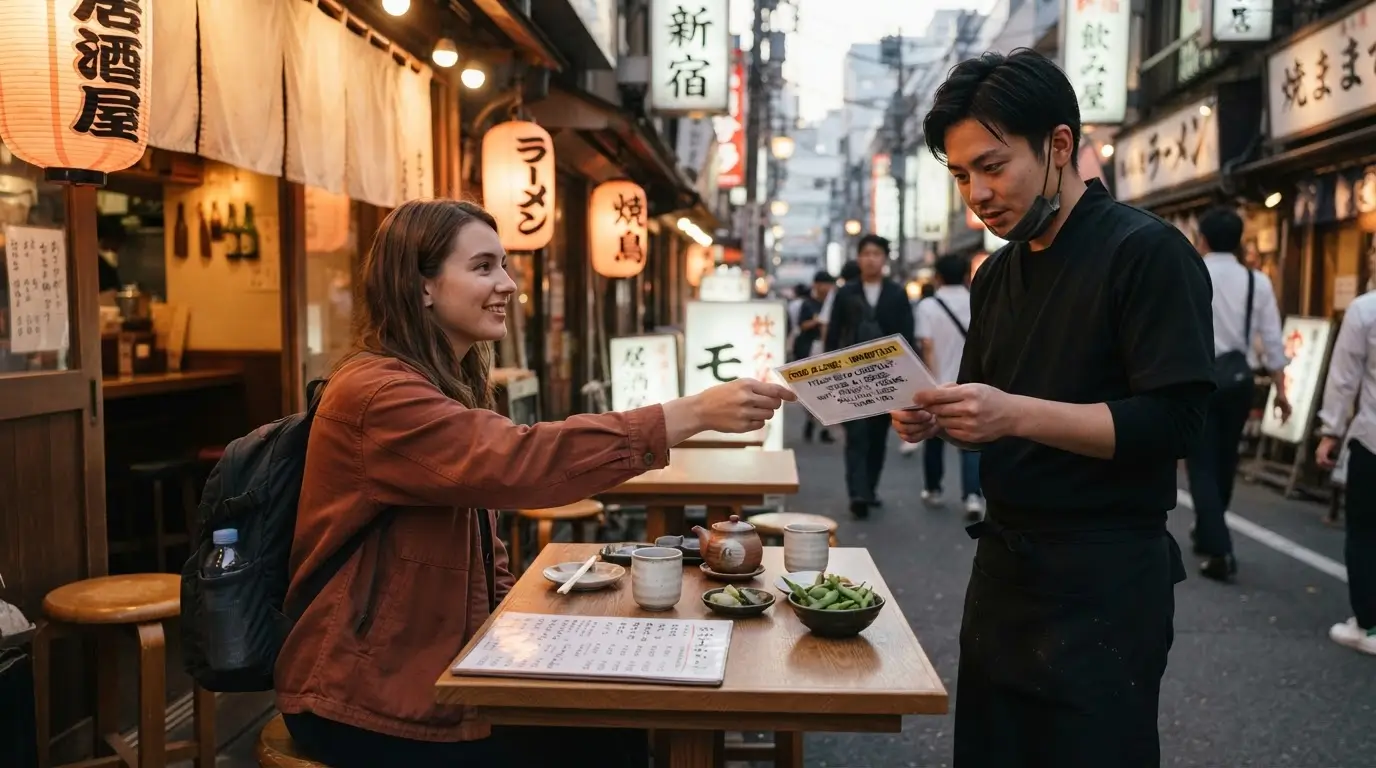
This is the packing tip that most food allergy travelers know about and fewer actually do thoroughly. A translation card that says “I am allergic to peanuts” in Thai is useful. A card that explains cross-contamination, shared cooking surfaces, hidden ingredients, and the severity of your reaction is what actually protects you. The difference between those two cards is the difference between a restaurant that removes the peanuts from your dish and one that actually understands what you need.
SelectWisely offers professionally translated allergy cards in over 60 languages that cover ingredients, cross-contamination, and medical severity language rather than simple food identification. AllergyEats produces similar cards with a focus on restaurant communication. For languages with complex scripts where simple translation apps may miss nuance, these professionally produced cards are worth the cost. Print two copies of each card, keep one in your wallet and one in your allergy kit, and screenshot a digital version saved offline on your phone. Hand the card to the server before you look at the menu, not after you’ve ordered, because the kitchen needs time to accommodate you rather than time to panic.
5. Pack Enough Safe Food to Bridge Every Gap
Every allergy traveler needs a food supply that bridges the moments when safe food simply isn’t available: long flights where airline meals can’t be trusted, layovers in airports with limited options, arrival days in new cities before you’ve identified safe restaurants, or rural destinations where communication about allergies is genuinely difficult. Packing enough of the right foods to cover these gaps isn’t pessimism. It’s the preparation that keeps minor situations from becoming medical ones.
What actually travels well and meets TSA requirements:
- RXBAR or Larabar bars with short, clearly printed ingredient lists that contain nothing you’re allergic to
- Individual nut-free, allergen-specific snack packs from brands like Made Good or 88 Acres that are specifically manufactured in allergen-free facilities
- Instant oatmeal packets in certified gluten-free or nut-free versions depending on your allergy profile
- Rice cakes or allergen-free crackers that survive bag pressure without crumbling entirely
- Individual packets of your safe condiments if sauces and seasonings are a trigger category for you
For international travel, research customs restrictions on food items at your destination before packing food. Many countries including Australia and New Zealand have strict biosecurity rules about bringing food across borders. The USDA’s Traveler’s Guide to Bringing Food Into the United States covers return trip rules for Americans.
6. Research Hospitals and Pharmacies Before You Need Them
Knowing where to go before a medical situation happens is what separates a managed emergency from a panicked one. This research takes fifteen minutes before each trip and is genuinely one of the most valuable packing tips for travelers with allergies in any format, because it’s information you carry in your head rather than in your bag.
For every destination, identify and save offline:
- The address and phone number of the nearest hospital emergency department to your accommodation
- The nearest 24-hour pharmacy and its hours of operation
- The local emergency services number, which is 112 in most of Europe, 999 in the UK, 911 in North America, 000 in Australia, and 110 or 119 in Japan depending on the situation
- The name of your specific allergen in the local language, not just translated but confirmed by a native speaker or professional translation service
International SOS offers a membership service that provides 24-hour medical assistance, local hospital referrals, and emergency evacuation coordination in most countries. For travelers with severe allergies, the annual membership cost is reasonable insurance against the specific scenario where you’re in a country whose healthcare system you don’t understand, having a reaction, and need immediate expert guidance in English.
7. Handle Airline Allergy Logistics Before You Get to the Gate
Airlines and severe allergies require proactive communication that starts at booking, not at check-in, not at the gate, and definitely not after you’ve settled into your seat and discovered that the passenger next to you has opened a bag of cashews. The earlier you start this communication, the more options you have.
At the time of booking, call the airline directly (not just the online form) to notify them of your allergy. Specifically ask:
- Whether they can provide an allergen-free meal or confirm meal ingredients in advance
- Whether they will make a gate announcement requesting passengers not consume your allergen during the flight, which some airlines do and others don’t
- Whether the aircraft type on your route uses nut-based products in the cleaning or catering process
Airlines vary significantly in their allergy policies. JetBlue and Air Canada have documented nut-free policies on request. Others offer buffer zones or will suspend nut snack service upon request. None of them can guarantee a completely allergen-free cabin because they can’t control what other passengers bring. Your seat buffer zone, a few rows around you where the airline asks passengers not to consume your allergen, is the most realistic accommodation most airlines can offer.
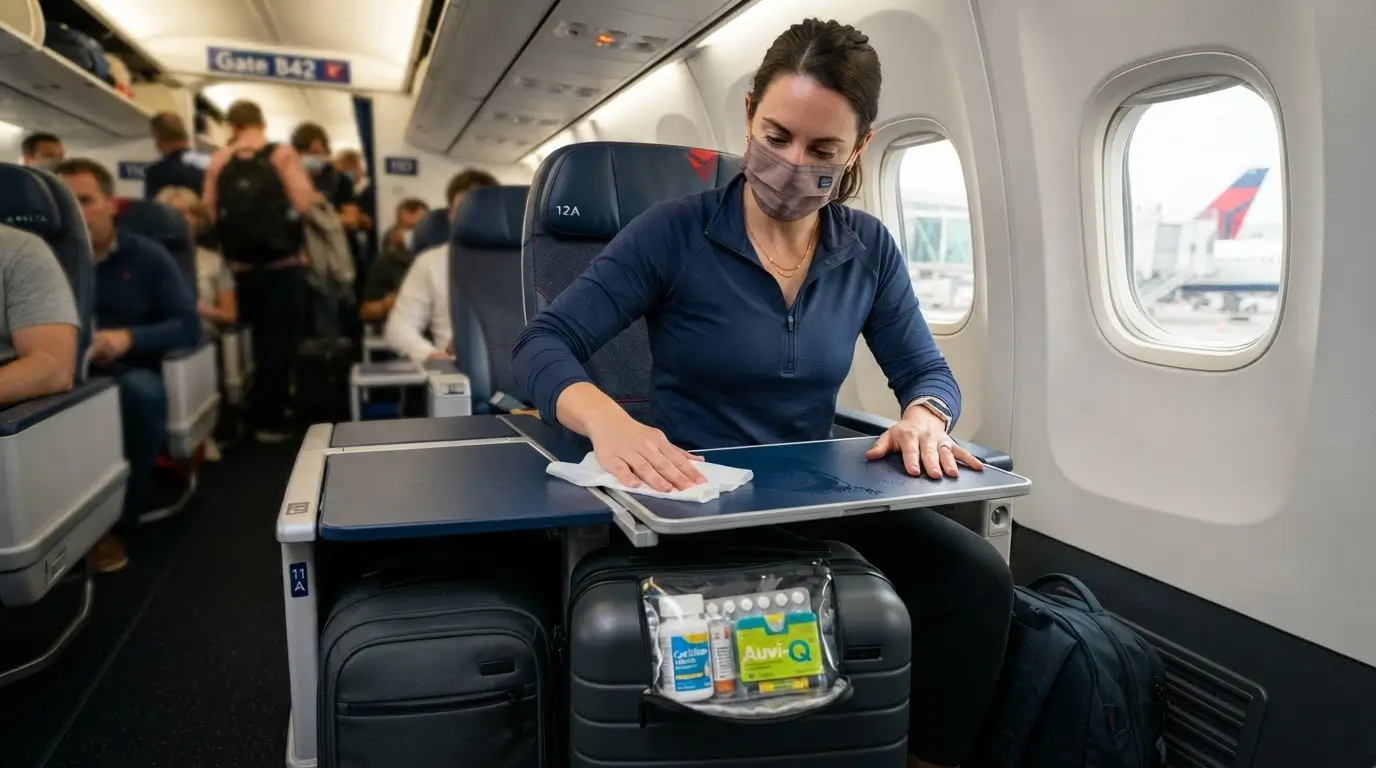
Board early using family or disability boarding to wipe down your seat, tray table, armrests, and seat pocket with allergy-safe wipes before anyone else settles in around you. Carry your medications in your personal item under the seat in front of you rather than in the overhead bin so they’re accessible throughout the flight without requiring you to get up.
8. Pack for Environmental Allergies With the Same Thoroughness as Food Allergies
Environmental allergy packing gets significantly less attention than food allergy packing in most travel guides, which underserves the significant portion of travelers whose seasonal allergies, dust mite sensitivities, mold reactions, or pet dander responses make certain accommodation types and certain seasons genuinely miserable rather than just slightly uncomfortable.
Environmental allergy travel packing that makes a real difference:
A portable HEPA air purifier: The Rabbit Air MinusA2 is too large for travel, but the LEVOIT Core 300 is compact enough for a large bag and makes hotel rooms with dusty bedding or air systems that circulate allergens significantly more tolerable. Plug it in when you arrive, run it for an hour before sleeping, and keep it running overnight.
Allergy-proof pillow cover: A thin, packable allergen barrier pillowcase that fits over hotel pillows eliminates one of the most significant dust mite exposure points in any accommodation. AllerEase makes travel versions that pack flat. Hotels wash their duvet covers but rarely their pillow fills between guests with the thoroughness that dust mite allergies require.
Preservative-free saline nasal spray: Environmental allergen exposure accumulates in nasal passages throughout the day. A saline rinse before bed removes accumulated pollen, dust, and pollution that would otherwise continue triggering your system overnight. This single habit reduces morning symptom severity dramatically for most environmental allergy sufferers.
Antihistamine eye drops: Zaditor or Alaway are over-the-counter antihistamine eye drops that specifically address the ocular symptoms that oral antihistamines often under-treat. Essential for travelers visiting high-pollen destinations or dusty archaeological sites.
9. Know Your Accommodation’s Allergy Risks Before You Check In
Accommodation presents allergy risks that travelers rarely investigate until they’re lying awake at 2 AM with itchy eyes and a congested nose in a hotel room that triggered every environmental allergy they have simultaneously. Preventing this requires specific questions asked before booking rather than observations made on arrival.
Contact the property directly and ask:
- Whether they use feather or down bedding and whether hypoallergenic alternatives are available upon request
- What cleaning products they use on surfaces and linens, relevant for travelers with chemical or fragrance sensitivities
- Whether pets are allowed in the property and specifically in the room category you’re booking
- Whether the property has air conditioning with filterable air flow versus open window ventilation, which matters significantly in high-pollen destinations
Booking.com allows filtering for non-smoking properties, which reduces the chemical irritant load for chemical-sensitive travelers. Airbnb hosts can be messaged directly about their cleaning product choices, pet presence, and bedding type before booking is confirmed. A host who responds positively and specifically to allergy questions is demonstrably more trustworthy than one who says “don’t worry, it’s very clean.” Both responses tell you something important before you commit.

10. Travel With Updated Medical Documentation Always
Medical documentation for allergy travelers does more work than most people use it for. Beyond the obvious function of explaining your condition to emergency medical staff, it enables customs to pass your medications without issue, helps flight crew understand the severity of your situation, supports travel insurance claims related to allergy-related medical events, and can access disability accommodations at attractions and transport hubs that aren’t universally advertised.
Your travel medical documentation should include:
A physician’s letter on clinic letterhead that identifies your allergies, lists all medications including controlled substances with generic names and dosages, and describes the severity of your allergic response in clinical terms. Update this annually and before each international trip.
A copy of your allergy action plan signed by your allergist. This document tells any medical professional, anywhere in the world, exactly what treatment protocol your doctor has prescribed for various levels of reaction.
Digital copies of everything stored in a cloud service accessible without your phone if necessary. Google Drive or iCloud with documents shared to a trusted contact at home means the information survives a lost or stolen phone.
Travel insurance documentation that specifically confirms coverage for allergy-related medical events. Some policies exclude anaphylaxis treatment costs if the traveler is documented as knowing their allergy risk. Read your policy’s specific language before you need to file a claim under it.
Airport and Flight-Specific Packing Tips for Allergy Travelers
Airports concentrate every allergy challenge into one environment: food courts with cross-contamination risk, recycled air with accumulated allergens, limited options, time pressure, and the particular stress of knowing your medications are in your bag somewhere in the security bin queue.
Pre-Security Preparation
Eat a safe meal before leaving for the airport rather than planning to find something at the terminal. Airport food options for allergy travelers are limited in every airport in the world and genuinely dangerous in some of them. Arriving fed removes the pressure that makes people take risks with food they wouldn’t take at home.
Keep medications in an easily accessible outer pocket of your carry-on rather than packed inside your main compartment. Security will want to see them separately, and the accessible location means you can reach them during the flight without overhead bin gymnastics.
Navigating Airport Food Courts
Chain restaurants with online menus are safer than independent airport restaurants because their allergen information is publicly documented and staff are trained on standard protocols. Chipotle, Shake Shack, and Freshii all publish allergen information that you can review before approaching the counter. Independent airport restaurants vary in staff training and ingredient knowledge in ways that are difficult to assess quickly under time pressure.
Frequently Asked Questions
What are the most important travel packing tips for travelers with severe food allergies?
The absolute priorities are two auto-injectors in your carry-on, professionally translated allergy cards in the local language covering cross-contamination and severity, a physician’s letter documenting your allergy for medical and customs purposes, enough safe snacks to bridge every food gap, and the address of the nearest emergency department at your destination saved offline before you land. These five items together prevent the overwhelming majority of severe allergy travel emergencies.
How do travelers with allergies handle hotel bedding and environmental triggers?
A packable hypoallergenic pillowcase eliminates the most significant dust mite exposure point. A compact HEPA air purifier running overnight dramatically improves room air quality. Contacting the hotel before arrival to request hypoallergenic bedding, confirm pet-free room status, and ask about cleaning products gives you actionable information rather than arrival-day surprises. Antihistamine eye drops and a saline nasal rinse before bed reduce symptom severity from whatever environmental exposure the day involved.
Can travelers with severe allergies fly safely on commercial airlines?
Yes, with proactive communication and appropriate preparation. Call the airline when booking to notify them of your specific allergy. Request a nut-free or allergen-specific meal. Ask about their buffer zone policy. Board early to wipe down your seat area. Keep medications accessible under the seat in front of you throughout the flight. The cabin environment is genuinely manageable with these precautions in place, though no airline can guarantee a completely allergen-free environment because passenger food choices are beyond their control.
What should allergy travelers do if they accidentally consume a trigger food abroad?
Follow your allergy action plan immediately without waiting to see how serious the reaction becomes. For anaphylaxis risk, use your auto-injector at the first sign of a systemic reaction and call emergency services simultaneously. For mild reactions, take your fast-acting antihistamine and move to a safe location where you can rest and be monitored. Tell someone nearby what is happening so you’re not managing a reaction alone. Seek medical evaluation even if the reaction seems to resolve, because biphasic reactions can occur hours after the initial exposure.
How do travelers find allergy-safe restaurants in foreign countries?
Find Me Gluten Free covers celiac and gluten allergy specifically with verified user reviews. AllergyEats focuses on food allergy-friendly restaurants in the U.S. Yelp and Google Maps reviews filtered by keyword search for your specific allergy surface recent traveler experiences. Local expat Facebook groups and destination-specific Reddit threads provide current, honest restaurant recommendations from people managing the same allergies in the same city. Always call ahead to the restaurant specifically to discuss your allergy before arriving, not just upon arrival.
Conclusion
Allergy travel has a learning curve that ends the moment you build a real system and start using it consistently, and on the other side of that curve is every destination you’ve been hesitant about, waiting for someone who has figured out how to get there safely. You’ve figured it out now. Where are you going first?