

The best travel guides for retirees share one quality that most generic travel content completely misses: they treat retired travelers as exactly what they are, experienced, resourceful, unhurried adults who have earned the right to travel on their own terms after decades of fitting everything else in around everything else. I traveled extensively with my parents after my father retired, and watching them navigate the world with patience, curiosity, and zero interest in following anyone else’s itinerary taught me more about what good travel actually looks like than any trip I’ve taken alone. This guide is built on that experience, real trips, real logistics, real lessons about what works and what doesn’t when you’re finally traveling for yourself.
1. Portugal: The Retiree’s Perfect European Base
Portugal earns the top spot on nearly every travel guide for retirees because it delivers on every dimension that matters most at this life stage. Safety, affordability, walkability in its flatter neighborhoods, extraordinary food and wine, and a pace of life that matches people who have nowhere to be and every reason to linger. My parents spent three weeks in Lisbon and Porto and described it as the first trip where they never once felt rushed.
The Algarve coast in southern Portugal adds a beach dimension that makes Portugal viable as a multi-week slow travel base rather than a quick city visit. Towns like Lagos, Tavira, and Carvoeiro offer cliff-top walking trails that are accessible to most fitness levels, fresh seafood restaurants where lunch stretches comfortably into mid-afternoon, and accommodation options from budget guesthouses to beautiful boutique hotels that don’t require spending a fortune to feel genuinely comfortable. Portugal’s relatively flat coastal terrain and excellent bus and train connections between cities make independent travel viable without a rental car, which matters for retirees who prefer not to navigate unfamiliar driving rules in a foreign country.
2. Japan: The Destination That Rewards Patience and Curiosity
Japan is the trip that retirees consistently describe as the most profoundly different travel experience of their lives, and the reason is almost entirely cultural. A country that operates on deep respect for elders, extraordinary attention to detail, and a pace of daily life that genuinely values quality over speed is a natural environment for travelers who have finally stopped rushing.
Practical accessibility in Japan is exceptional. Elevators at virtually every metro station, priority seating that is actually honored, staff trained to assist travelers of all ages and mobility levels, and signage in English at every major transit hub make independent navigation genuinely manageable. The Japan Rail Pass gives unlimited travel on the Shinkansen bullet train network for a fixed price, which removes transportation logistics from the equation once you’re there and lets you move between Tokyo, Kyoto, Hiroshima, and Osaka without planning individual tickets for each journey. Ryokan inns, the traditional Japanese guesthouses, offer a travel experience specific to Japan that simply doesn’t exist anywhere else. Sleeping on tatami mats, bathing in private onsen hot springs, and eating elaborate multi-course kaiseki dinners without leaving the property creates a complete cultural immersion that no hotel can replicate.

3. Italy: Food, History, and the Art of Doing Nothing Beautifully
Italy has been on most retirees’ bucket lists for long enough that it carries genuine emotional weight by the time they actually book it. The good news is that it delivers. The bad news is that the Italy experience varies dramatically depending on how you approach it, and most first-time visitors approach it wrong by trying to see too much too fast.
Slow Italy is the version that works for retirees. One week in Tuscany with a base in Siena or San Gimignano. Day trips to hill towns, vineyards, and markets rather than racing between Rome, Florence, Venice, and the Amalfi Coast in eight days. The hill towns of Umbria, specifically Assisi, Orvieto, and Spello, are less crowded than their Tuscan counterparts, equally beautiful, and built on terrain that’s gentler to walk than the steep medieval streets of some better-known destinations. Cooking classes, wine tastings, afternoon gelato consumed without any agenda, and long dinners that start at 8 PM and end when they end are the Italy that retirees come home talking about. Not the sprint between monuments with a selfie stick.
4. New Zealand: Active Retirement Done Right
New Zealand is the destination for retirees who define this life stage by finally having time to do the outdoor things they always pushed to weekends and never quite managed. The country’s trail network, its scenic drives, its combination of dramatic landscape variety within short distances, and its overall standard of infrastructure make it one of the most accessible adventure destinations in the world for travelers in their 60s and 70s.
The Otago Rail Trail in the South Island is a 150-kilometer cycling trail through Central Otago’s high country that runs at a gentle grade designed for comfortable multi-day riding. Self-guided options with luggage transfer between accommodation stops make it completely accessible without any camping or heavy carrying. Campervan rental from companies like Maui or Britz combines transport and accommodation into one predictable daily cost and lets you stop whenever the view demands it, which in New Zealand is approximately every fifteen minutes. The Hobbiton movie set in Matamata, the geothermal landscapes at Rotorua, and the wine region of Marlborough add cultural and culinary dimensions to what could easily become a purely outdoor trip.
5. Scotland: Landscape, Whisky, and Deep History
Scotland resonates with retirees in ways that are hard to fully explain but immediately recognizable when you arrive. There’s a quality to the light, the landscape, and the history that feels more accessible to people who have lived enough to appreciate depth over spectacle. Standing in a 12th century abbey, walking the battlefields of Culloden, or sitting in a distillery learning about whisky from someone whose family has made it for four generations lands differently when you have the patience and the emotional context to let it.
The North Coast 500 road trip offers one of the great driving experiences in the world for retirees who enjoy self-guided exploration. Scotland drives on the left, which requires adjustment for North American visitors, but the roads outside the cities are generally quiet and the pace is entirely your own. Castle hotels and country house hotels along the route offer accommodation that’s genuinely part of the experience rather than just a place to sleep, with some properties dating to the 14th century and offering four-poster beds, roaring fireplaces, and dinners built around local game and Scottish seafood. Budget-conscious retirees find that traditional B&Bs throughout the Highlands offer extraordinary hospitality and home-cooked Scottish breakfasts at prices that make city hotel rates look absurd by comparison.
6. Costa Rica: Nature, Warmth, and Easy Logistics
Costa Rica has earned its reputation as one of the most retiree-friendly international destinations available to North American travelers, and the combination of factors that create that reputation is genuinely difficult to match elsewhere. Short flights from most U.S. cities (three to six hours from most East Coast hubs), no jet lag to recover from, warm weather year-round, English widely understood in tourist areas, excellent private healthcare infrastructure, and natural beauty that ranges from cloud forests to Pacific beaches to Caribbean coastline in a country smaller than West Virginia.
Guanacaste province on the Pacific coast offers the most resort-friendly infrastructure with direct international flights into Liberia and beach towns like Tamarindo, Flamingo, and Nosara that have developed specifically around the needs of international visitors. For retirees interested in wildlife, the Monteverde Cloud Forest Reserve and Manuel Antonio National Park offer wildlife encounters, sloths, monkeys, toucans, and sea turtles, at a pace and on trails that are accessible without requiring serious hiking fitness. Costa Rica’s private hospital system, particularly CIMA Hospital and Clínica Bíblica in San José, meets international standards and handles medical situations that might arise during extended stays. This healthcare infrastructure is one of the specific reasons Costa Rica consistently appears at the top of retirement and extended travel lists for older travelers.
7. Greece: Mythology, Mediterranean Food, and Islands That Belong to You
Greece is the destination where retirees can most fully inhabit the experience of sitting somewhere extraordinary with nothing specific to do. Island café culture exists precisely for long mornings with strong coffee, good conversation, and a view of the Aegean that makes you wonder why you spent forty years behind a desk. That feeling is available in Greece at a price that makes it genuinely accessible rather than aspirational.
Crete is the island that works best for first-time retirees visiting Greece because its size means you could spend two weeks there without running out of things to discover. The Samaria Gorge offers one of Europe’s most celebrated day hikes with shuttle transportation that means you only walk one direction. The eastern end of the island around Elounda and Agios Nikolaos is significantly quieter than the touristy north coast and has excellent accommodation and restaurants without the summer crush. Island hopping by Blue Star Ferries between Rhodes, Kos, Patmos, and the Dodecanese island chain gives retirees who want to keep moving a comfortable, scenic alternative to flying between islands. Cabin berths on overnight ferries eliminate a night’s accommodation cost while covering the distance.
8. The American Southwest: National Parks Without the Complications
Not every great retiree trip requires an international flight, a new currency, or a language barrier. The American Southwest offers some of the most extraordinary natural landscapes on earth within a country that retirees already know how to navigate, with healthcare readily accessible, cell phone coverage increasingly reliable even in remote areas, and accommodation options ranging from basic campgrounds to exceptional park lodges that put you directly inside the landscapes you came to see.
Sedona, Arizona specifically deserves its reputation as one of the premier retiree destinations in the United States. The red rock landscape is genuinely breathtaking in a way that photographs never fully capture. The town has excellent restaurants, spa options, and accessible hiking trails rated by difficulty so you can match your physical capabilities to the appropriate experience. The Grand Canyon’s South Rim has shuttle bus service throughout the most visited viewpoints that makes the entire experience accessible without strenuous hiking. Zion National Park’s shuttle system similarly removes the need to navigate parking while delivering you to trailheads where accessible walks like the Pa’rus Trail run along the Virgin River with views of the canyon walls that rival anything else in the park.
9. River Cruising Through Europe
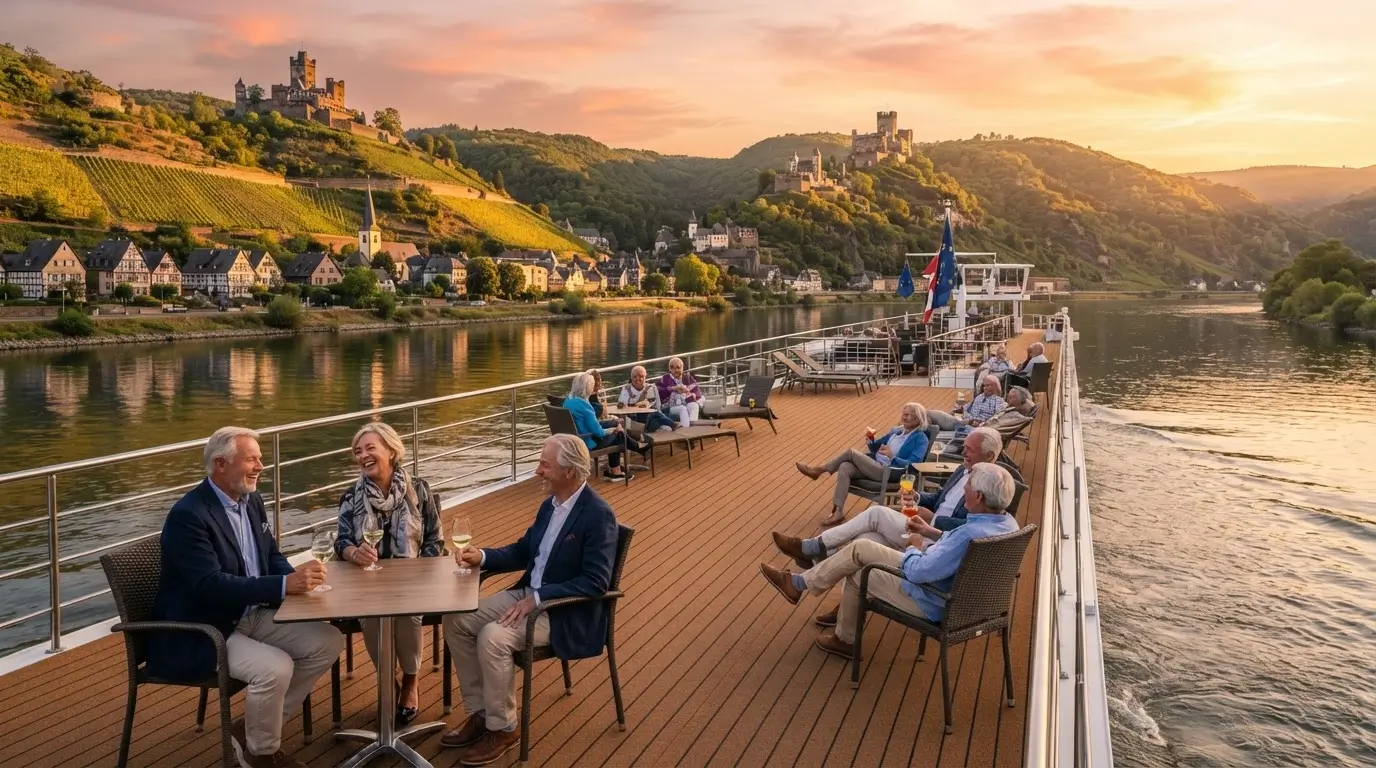
River cruising deserves its own section rather than a passing mention because it represents a travel format specifically suited to retirees in ways that ocean cruising and independent hotel-based travel both partially miss. The combination of moving accommodations, included meals, curated shore excursions, and intimate ship size creates a genuinely low-logistics, high-quality travel experience that allows you to cover extraordinary ground without repacking, finding new restaurants, or managing transportation between cities.
Viking River Cruises consistently ranks as the top operator for retirees based on ship quality, itinerary depth, and the caliber of included excursions. Their Rhine, Danube, and Seine itineraries cover some of Europe’s most historically and culturally rich river corridors with overnight docking in cities like Amsterdam, Vienna, Budapest, Paris, and Prague that gives you evening time ashore in addition to daytime excursions. AmaWaterways is the premium alternative with slightly smaller ships and a higher service ratio that some retirees prefer. Tauck River Cruising operates at the luxury end of the market with all-inclusive pricing that removes even the small financial decisions from the journey. The social dynamic on river cruises also suits many retirees because ships carry 100 to 200 passengers rather than 3,000, creating an environment where you genuinely recognize fellow travelers and develop real acquaintances over the course of a week.
10. Scandinavia: Clean, Safe, and Quietly Extraordinary
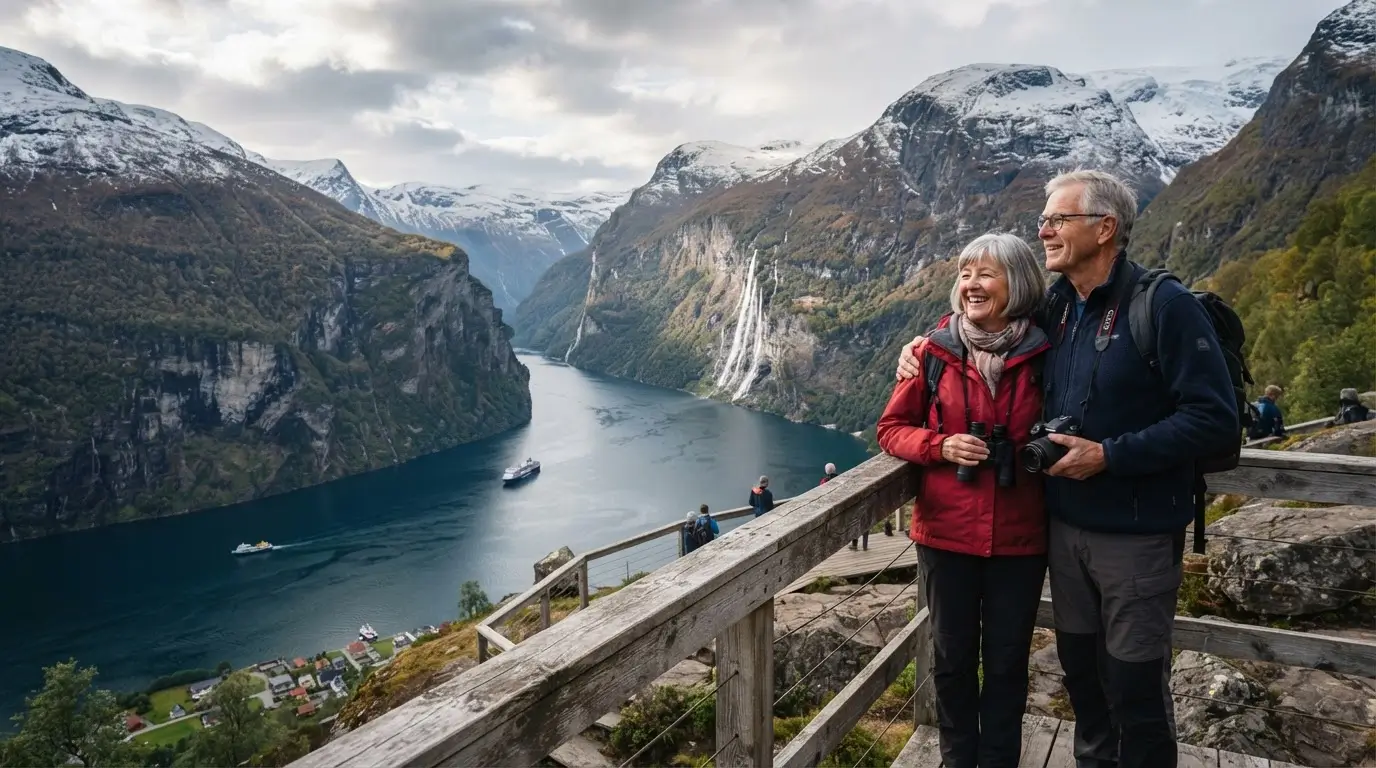
Scandinavia is expensive and worth it. I put that upfront because retirees who budget appropriately for Scandinavia have extraordinary experiences, while those who arrive expecting Mediterranean prices and find Nordic ones feel the gap acutely. Norway, Sweden, Denmark, and Finland all offer safety records among the best in the world, healthcare systems that are excellent if needed, infrastructure that is entirely accessible for travelers with mobility considerations, and natural and cultural experiences that range from the Northern Lights in Arctic Norway to the Viking Ship Museum in Oslo to the design and food culture of Copenhagen.
Copenhagen is the natural starting point and genuinely one of the most livable, walkable, beautiful cities in Europe. The Nyhavn harbor district, the Tivoli Gardens, the exceptional food scene built around New Nordic cuisine, and the city’s extraordinary cycling infrastructure make it easy to spend five days here and never feel like you’ve exhausted it. Norway’s fjords, specifically the Geirangerfjord and Nærøyfjord, both UNESCO World Heritage sites, are accessible by ferry from Bergen and deliver scenery that justifies the flight and the cost entirely. The Hurtigruten coastal express offers a ship-based journey up the Norwegian coastline that combines the logistical ease of cruising with the wild beauty of the Arctic coast in a way that pure land travel can’t replicate.
Planning Advice Specific to Retirees
Retirees face a specific set of planning considerations that general travel advice addresses poorly or not at all.
Pace Your Itinerary for Genuine Enjoyment
Two destinations in two weeks beats five countries in two weeks at every life stage, but it beats it most dramatically for retirees. Constantly moving generates fatigue that compounds faster as we age, and arriving somewhere new every two to three days means spending real energy on logistics rather than on the actual experience. Give each destination enough time to stop feeling new and start feeling familiar. That transition, from tourist to temporary resident, is where the best travel experiences live.
Build Medical Preparation Into Every Trip
Travel insurance that covers pre-existing conditions and medical evacuation is non-negotiable for retired travelers. Allianz Travel, Travel Guard, and Medjet Assist all offer policies specifically designed for older travelers with existing health conditions. Carry a complete medication list with generic drug names, since brand names differ internationally. Carry enough medication for the full trip plus a two-week emergency buffer. Research the location of the nearest hospital or clinic at every destination before you need it. None of this is excessive caution. It’s the same preparedness that experienced retirees apply to everything else in their lives, applied to travel.
Use Senior Discounts Without Embarrassment
Senior discounts exist everywhere and most retirees leave significant money on the table by not asking for them consistently. The America the Beautiful Senior Pass provides lifetime free access to all U.S. national parks for travelers 62 and older for $80. European museums, transit systems, and attractions commonly offer 50 percent or greater discounts for travelers over 60 or 65. Airlines including British Airways and Lufthansa offer senior fare programs that surface deals not visible in standard search engines. AARP Travel negotiates group rates on hotels, cruises, and car rentals that are frequently better than anything available through standard booking platforms. Carrying identification that confirms your age internationally, a passport lists your birth date, means you can access these discounts in any country without additional documentation.
Consider Group Travel for First International Experiences
For retirees taking their first international trips or venturing to destinations that feel logistically complex, small group tours designed for the 60-plus demographic remove the planning burden without the anonymous, bus-herding experience of mass tourism. Overseas Adventure Travel specializes in active retirees with small groups of 16 or fewer and itineraries designed around genuine cultural engagement rather than monument checklisting. Grand Circle Travel has served the senior travel market for decades with particularly strong programs in Eastern Europe, the Mediterranean, and Asia. Both companies handle logistics, accommodation, and guide services in ways that free you to focus on the experience rather than the execution.
Frequently Asked Questions
What are the best travel destinations for retirees with limited mobility?
River cruises in Europe eliminate most mobility challenges by bringing you to destinations and providing shore excursion options rated by difficulty. Portugal’s coastal Algarve region and Japan’s major cities both offer excellent accessibility infrastructure. Sedona and other U.S. national park destinations have made significant accessibility improvements with paved accessible trails, shuttle systems, and accessible visitor facilities. Accessible Travel Solutions and Wheel the World both specialize in booking travel specifically designed for travelers with mobility limitations.
How do retirees handle travel insurance with pre-existing conditions?
Declare every pre-existing condition honestly when purchasing travel insurance regardless of whether you believe it’s relevant. Non-disclosure voids claims in ways that create genuine financial catastrophe during international medical emergencies. Allianz, Travel Guard, and Seven Corners all offer policies that cover pre-existing conditions when purchased within a specific window of your initial trip deposit, typically 14 to 21 days. Medjet Assist specifically covers medical evacuation and transport to your home hospital, which many standard policies don’t include. Compare policies on InsureMyTrip.com which aggregates options and allows filtering by pre-existing condition coverage.
What is the best way for retirees to manage medications while traveling internationally?
Carry all medications in original labeled containers in your carry-on bag, never in checked luggage. Carry a letter from your physician listing all medications with generic names, dosages, and the medical conditions they treat. Research whether your specific medications are legal in your destination country, since some common medications are controlled substances in certain countries. Carry enough supply for the entire trip plus two extra weeks. For extended travel, research whether your medications are available internationally through your travel health insurer or through International SOS pharmacy services.
How do retirees find travel companions if they want to travel with others?
Road Scholar (formerly Elderhostel) offers educational travel programs specifically for travelers 50 and older that function as built-in companion-finding experiences. Solo Traveler World and Travel Buddies connect older solo travelers who want companions for specific trips. Cruise ships naturally create social environments where retirees meet fellow travelers. AARP’s travel community and local retirement community travel clubs organize group trips with built-in companions for travelers who prefer not to go alone.
Is long-term slow travel realistic for retirees on a fixed income?
Genuinely yes, and often more affordable than retirees expect. Monthly rental rates in Portugal, Greece, Mexico, and Southeast Asia for a comfortable apartment range from $700 to $1,500, which competes favorably with U.S. housing costs for many retirees. International Living Magazine tracks cost of living in retirement destinations worldwide and consistently identifies countries where retirees live comfortably on Social Security income alone. The key is choosing destinations where your fixed income goes significantly further than at home, which includes most of Southern Europe, Central America, Southeast Asia, and parts of South America.
Conclusion
Retirement is not the end of the travel story. For most people who finally have the time, the patience, and the freedom to travel without someone else’s schedule determining theirs, it’s the beginning of the best chapter of it. Every destination on this list is designed for people who know how to appreciate where they are, and that is exactly what decades of living well teaches you. Where is the first place you’re going?