

Finding genuinely useful budget friendly travel tips for wheelchair users that go beyond “call ahead and hope for the best” is harder than it should be in 2024. I’ve been a full-time wheelchair user for six years, and the gap between what mainstream travel advice offers and what actually works when you’re rolling through an airport alone with a carry-on balanced on your lap is significant enough to be genuinely frustrating. Travel is absolutely possible, often wonderful, and more affordable than the accessibility industry wants you to believe. You just need the right information from people who’ve actually lived it.
1. Research Accessibility Before You Research Anything Else
Every other travel decision, flights, accommodation, activities, flows from one foundational question: can I actually move through this destination in my wheelchair? Answering that question thoroughly before booking anything saves money, stress, and the particular kind of disappointment that comes from arriving somewhere beautiful and discovering you can access about thirty percent of it.
Start with Wheelmap.org, a crowdsourced global map that rates locations as fully accessible, partially accessible, or not accessible at all. It covers restaurants, museums, hotels, and public spaces in hundreds of cities worldwide. Curb Maps does similar work with more focus on street-level infrastructure. For destination-level research, disability travel blogs written by actual wheelchair users give you ground-truth information that no tourism board website will. Search specifically for “[destination name] wheelchair user review” and prioritize recent posts. Infrastructure changes. A review from 2019 may not reflect what you’ll find today.
2. Choose Your Destination With Accessibility as the Primary Filter
Some cities were built for wheelchairs. Others were built on hills with cobblestones and good intentions. Knowing which is which before you buy a flight is the most budget-protective decision you can make, because an inaccessible destination costs you money in workarounds, missed activities, and alternative transport that you didn’t budget for.
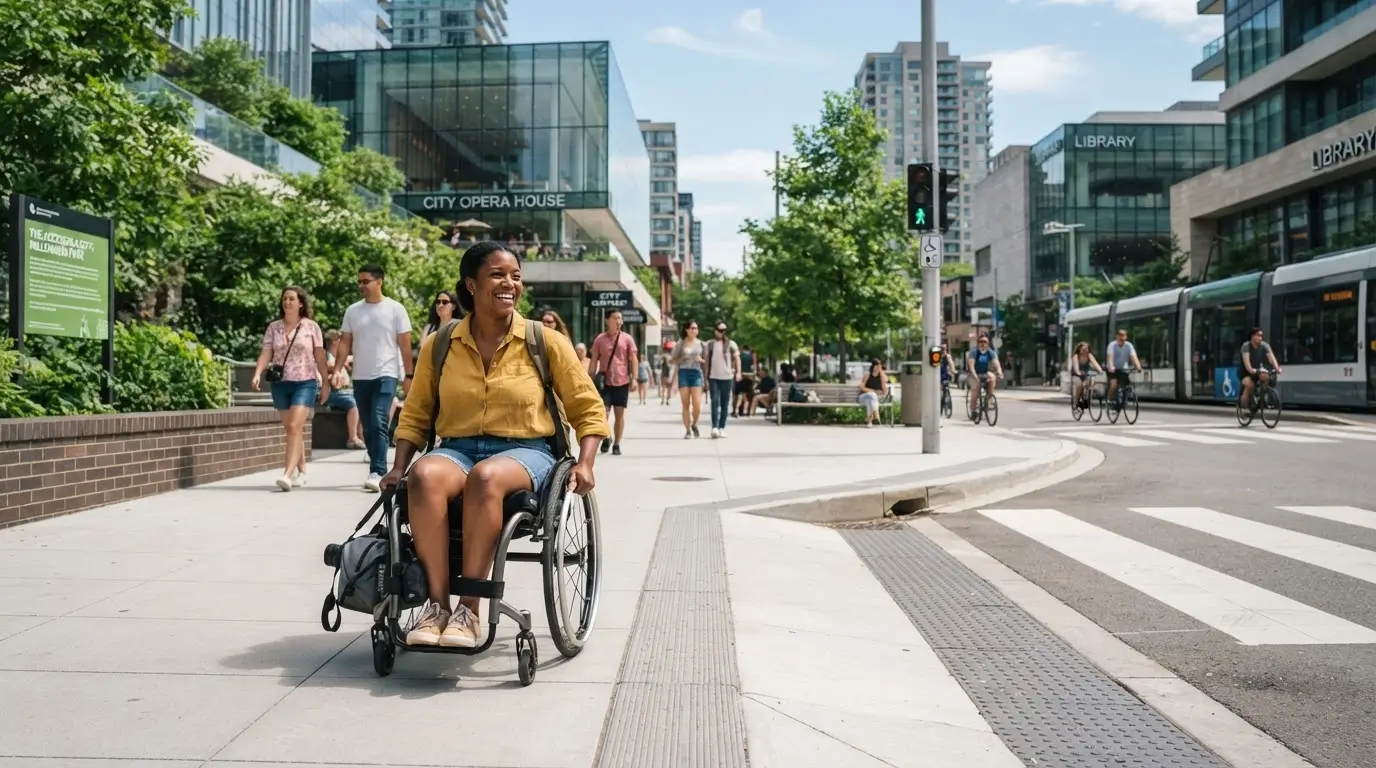
Barcelona has invested heavily in accessibility infrastructure with ramped metro stations, wide sidewalks, and a relatively flat city center. Amsterdam is famously flat with excellent tram and bus accessibility. Tokyo is arguably the most wheelchair accessible major city in the world, with elevator access at nearly every metro station, tactile paving throughout, and a cultural commitment to accessibility that shows in everyday infrastructure. Washington D.C. within the U.S. is exceptionally accessible with the entire Smithsonian museum network being free and fully wheelchair accessible. San Diego and San Antonio both offer warm weather, flat terrain, and strong accessibility records. Choosing right at this stage prevents expensive corrections later.
3. Book Flights Strategically and Know Your Rights Cold
Flying in a wheelchair involves a set of logistics that non-disabled travelers never think about, and understanding them fully before your travel day is what separates a smooth airport experience from a genuinely terrible one. The Air Carrier Access Act in the U.S. gives wheelchair users specific legal rights that airlines are obligated to honor, and knowing them means you don’t accept less than what you’re owed.
Airlines must provide:
- Aisle chairs to board and deplane
- Bulkhead seating or another seat with adequate space if requested
- Assistance through the airport at no additional charge
- Safe transport of your wheelchair as checked baggage at no cost
- A written explanation if your wheelchair is damaged during transport
Call the airline directly after booking online to notify them of your specific needs. Do this even if you completed the accessibility section during booking, because those notes don’t always reach ground staff reliably. Request a specific seat, confirm the wheelchair will be gate-checked or checked to the hold based on your preference, and ask for the direct number of the accessibility desk rather than general customer service. Southwest and Alaska Airlines consistently receive higher marks from disabled travelers for accessibility handling than most major carriers.
4. Always Gate Check Your Wheelchair if You Use a Manual Chair
This one trips up new travelers and experienced ones alike. If you use a manual wheelchair, gate checking it rather than checking it at the ticket counter keeps it with you through the entire airport experience and means it comes back to you at the jet bridge door the moment you deplane. Checking it at the ticket counter means it goes into cargo hold baggage and comes out on the baggage carousel, which adds time, handling, and significantly more opportunity for damage.
Wheelchair damage by airlines is a documented and serious problem. A 2021 U.S. Department of Transportation report found that airlines mishandle roughly 29 wheelchairs per day. Before every flight, photograph your wheelchair from multiple angles and note any existing wear or damage in writing. If your chair arrives damaged, report it immediately at the airport before leaving, file a claim with the airline in writing, and contact the Department of Transportation if the airline refuses to resolve it. Power wheelchair users face additional complexity since lithium batteries have specific airline regulations. Check the FAA guidelines for your specific battery type well before your travel date.
5. Find Accessible Accommodation Without Paying Premium Prices
Accessible hotel rooms carry an undeserved reputation for being expensive, institutional-feeling, and hard to find. The reality is more nuanced. Truly accessible rooms with roll-in showers, lowered beds, and adequate turning radius do cost more at luxury properties. But at mid-range hotels and vacation rentals, the price difference is often minimal and sometimes nonexistent.
Booking.com has a dedicated accessibility filter that lets you specify roll-in shower, wide doorways, elevator access, and ground floor availability. Filter results by these requirements before you look at prices. Airbnb added accessibility features in 2021 that allow filtering for step-free access, wide doorways, accessible parking, and roll-in showers, though user-reported accuracy varies and always warrants a direct message to the host to confirm specific measurements. Motel 6 and Hampton Inn properties in the U.S. consistently receive positive feedback from wheelchair users for their accessible room quality relative to price. Always call to confirm the specific accessible room features before booking, not just that an accessible room exists.
6. Use Public Transit Wherever It’s Genuinely Accessible
Adapted taxis, private wheelchair accessible vehicle services, and airport transfer companies charge significantly more than public transit, and those costs compound quickly over a multi-day trip. In cities with genuinely accessible public transit systems, using them instead saves real money and often delivers a more authentic travel experience.
Tokyo’s metro system has elevator access at the overwhelming majority of stations and staff stationed specifically to assist wheelchair users board correctly. London’s Elizabeth Line was built with full step-free access throughout. Washington D.C.’s Metro is almost entirely accessible with elevators at every station (though checking the WMATA elevator status page before each journey is genuinely necessary since outages happen). In cities where transit accessibility is unreliable, Uber WAV (wheelchair accessible vehicle) offers transparent pricing and tends to cost less than dedicated disability transport companies. Research which option makes financial sense for your specific destination before assuming you’ll need private transport for everything.
7. Look for Disability Discounts and Free Access Programs
This is the budget tip that wheelchair users and disabled travelers consistently leave money on the table by not pursuing. Disability discounts exist at a surprising number of attractions, transport systems, and accommodation providers worldwide, but they’re rarely advertised prominently and require you to ask specifically.
In the U.S., the America the Beautiful Access Pass is one of the best financial tools available for disabled travelers. It provides free lifetime entry to all U.S. national parks and federal recreational lands for U.S. citizens or permanent residents with permanent disabilities. It’s free to obtain in person at any participating federal recreation site. That single pass covers entry to Yellowstone, the Grand Canyon, Zion, Acadia, and hundreds of other sites that would otherwise cost $20 to $35 per vehicle per visit.
In Europe, many museums offer free or significantly reduced entry for disabled visitors and one accompanying caregiver. The Louvre in Paris, the Uffizi in Florence, and most national museums in the UK offer free entry to disabled visitors. Always ask at the ticket desk before paying full price, and carry documentation of your disability status when traveling internationally.
8. Pack a Wheelchair Travel Repair Kit
A flat tire, a loose bolt, or a snapped armrest in a city where you don’t speak the language and don’t know a wheelchair repair shop is a situation that turns a good trip into a genuinely difficult one. Carrying a basic repair kit costs almost nothing and prevents the kind of emergency that becomes an expensive, stressful scramble.
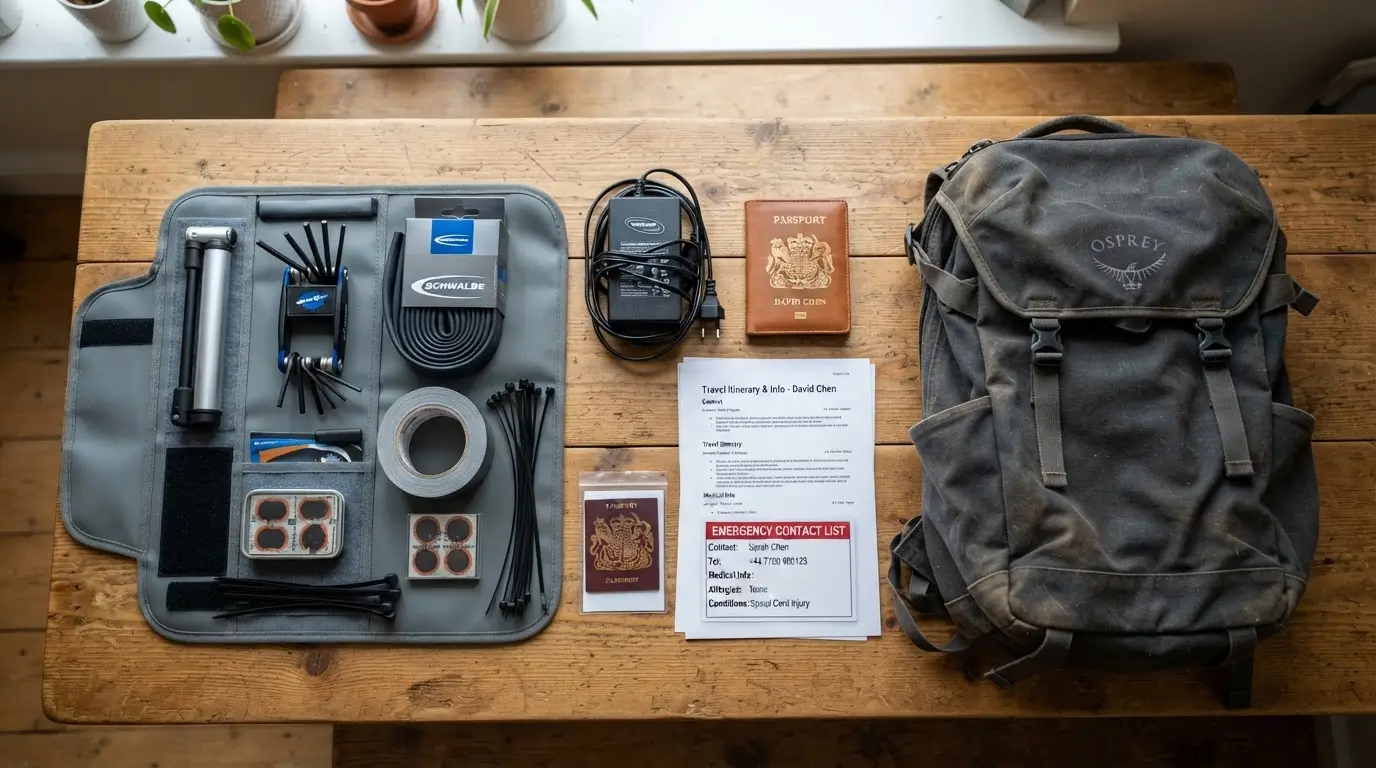
A solid wheelchair travel repair kit includes:
- A portable tire pump or CO2 inflator for manual chairs with pneumatic tires
- A multi-tool with Allen keys and screwdrivers sized for your chair’s hardware
- A spare inner tube if your chair uses them
- Zip ties and duct tape for temporary fixes
- The contact information for wheelchair repair shops at your destination, researched before you leave
For power wheelchair users, carry your charger in your carry-on rather than checked luggage, bring documentation of your battery specifications for airport security, and research service centers for your specific chair brand in the cities you’re visiting. Permobil and Quantum both have international service networks worth mapping before any international trip.
9. Travel With a Companion Strategically, Not Automatically
The instinct for many wheelchair users is to always travel with a companion for safety and practicality. Sometimes that’s the right call. But companion travel adds cost, requires schedule coordination, and can subtly shift the trip dynamic in ways that compromise your independence and spontaneity. Solo wheelchair travel is genuinely viable in many destinations and genuinely empowering when you pull it off.
The decision should be strategic rather than default. Solo travel works best in highly accessible cities with reliable public transit, flat terrain, and strong disability tourism infrastructure. Tokyo, Barcelona, Amsterdam, and Washington D.C. are excellent solo wheelchair travel destinations. More challenging terrain, unreliable accessibility infrastructure, or medical complexity that warrants backup support are legitimate reasons to travel with a companion. If you do travel with a companion, look for companion fare programs on airlines. Air Canada offers a companion fly-free program for travelers with permanent disabilities that meets specific criteria. Some travel insurance policies also cover companion costs when a disabled traveler requires assistance. Research these programs for your specific route before assuming companions always pay full price.
10. Connect With the Wheelchair Travel Community Before You Book
The single most valuable resource for budget friendly travel tips for wheelchair users is other wheelchair users who have already been where you want to go. The community is active, generous with information, and refreshingly honest about what works and what doesn’t in a way that tourism boards and travel agencies simply cannot match.
Spin the Globe is a wheelchair travel blog run by John Morris that covers dozens of destinations with detailed, practical accessibility information. Rolling with the Joneses documents family travel with a wheelchair user parent. Wheel the World is a platform specifically for accessible travel booking that partners with vetted accessible accommodation and tour providers in over 50 countries. On social media, the #wheelchairtravel hashtag on Instagram and TikTok surfaces current, real-time content from travelers navigating specific destinations right now. Before booking any trip, spending two hours in these communities will give you information that takes solo research days to uncover.

Budgeting Specifically for Wheelchair Travel
Wheelchair travel budgets need line items that standard travel budgets don’t account for. Acknowledging them upfront prevents the financial surprises that derail trips mid-journey.
Account for Accessibility Workarounds
Even in highly accessible destinations, you will encounter situations where the accessible route costs more than the standard one. An accessible taxi instead of a subway because the elevator is out. A ground floor hotel room upgrade because the accessible room is only available on a higher floor during an elevator outage. A private tour because the group tour can’t accommodate your chair. Budget an additional 10 to 15 percent beyond your standard travel budget specifically for these situations. Use it if you need it, keep it if you don’t.
Travel Insurance Is Non-Negotiable
Standard travel insurance often excludes pre-existing conditions or charges significant premiums for them. World Nomads covers many disabilities and pre-existing conditions with upfront disclosure. Battleface is another insurer that specializes in higher-risk and disability travel coverage. For wheelchair users specifically, look for policies that cover wheelchair damage or loss, medical evacuation, and trip cancellation due to disability-related complications. Read the fine print before purchasing. The difference between a policy that covers your chair and one that doesn’t is potentially thousands of dollars.
Frequently Asked Questions
What are the most wheelchair accessible cities in the world for budget travelers?
Tokyo, Barcelona, Amsterdam, and Washington D.C. consistently rank highest for combining genuine wheelchair accessibility with reasonable travel costs. Tokyo is arguably the gold standard for accessibility infrastructure. Washington D.C. is the best domestic U.S. option with free Smithsonian museums and an accessible Metro system. Barcelona offers flat terrain, accessible beaches, and strong public transit at moderate costs.
How do wheelchair users handle inaccessible hotel bathrooms abroad?
Carry a portable shower chair if your manual chair cannot enter a wet area. A handheld shower head adapter that fits standard faucets costs under $20 and solves many bathroom accessibility gaps. Tub transfer benches work for some users. Always confirm specific bathroom dimensions with accommodation providers before booking, specifically the shower entry width and whether there is a lip or step. Photos from the property help more than written descriptions.
Can wheelchair users go on cruises affordably?
Yes, and cruises are actually one of the better value travel formats for wheelchair users because accessibility is built into the ship infrastructure by regulatory requirement. Royal Caribbean and Norwegian Cruise Line both have strong accessibility reputations. Book accessible cabins early since they’re limited and sell out first. Research port accessibility carefully since the ship being accessible doesn’t guarantee that every port stop is navigable. Some ports require tendering (small boat transfer) which can be difficult or impossible for wheelchair users.
What documentation should wheelchair users carry when traveling internationally?
Carry a letter from your physician describing your disability and any medical equipment you travel with, including wheelchair specifications and battery type for power chairs. Carry documentation of any medications, especially controlled substances, with original pharmacy labels. An ISIC disability card provides internationally recognized proof of disability status for discount purposes. Keep digital copies of everything in a secure cloud storage app accessible without Wi-Fi.
How do wheelchair users find accessible tours and activities at budget prices?
Wheel the World offers vetted accessible tours in dozens of destinations at standard market prices. Local disability organizations at your destination often know accessible tour operators that don’t appear in mainstream travel searches. For free and low-cost accessible activities, national parks with paved accessible trails, free museum days, and self-guided city exploration using Wheelmap to identify accessible routes consistently deliver genuine experiences without tour company pricing.
Conclusion
Wheelchair travel is not the compromised, complicated, endlessly negotiated experience that some people assume it has to be. With the right destination, the right research, and the right community behind you, it is simply travel, with a few extra steps in the planning stage and a few extra conversations along the way. Where are you thinking of going next?