
Every affordable travel guide for low income travelers should start by saying the quiet part out loud: most travel content is written for people who already have money. The “budget travel” articles recommending $80 hostels and $400 flights as the cheap option. The packing guides featuring $200 luggage. The destination lists that bottom out at $150 a day. None of that is budget travel. That’s just regular travel with a discount sticker on it. This guide is for people working with real constraints, real numbers, and a genuine desire to see something beyond their zip code. Everything here has been tested, lived, and done on actual limited income.
1. Shift Your Mindset About What Travel Means
Before destinations, before booking strategies, before packing lists, the single most important thing any affordable travel guide for low income travelers can offer is a reframe. Travel does not require a flight. It does not require a hotel. It does not require two weeks off work or a passport or a savings account that looks comfortable. Travel requires curiosity and movement. Everything else is negotiable.
A weekend in a state park two hours from home is travel. A bus trip to a city you’ve never visited is travel. Couchsurfing in a friend’s apartment in a different state and spending three days walking neighborhoods you’ve never seen is travel. The version of travel that costs thousands of dollars is one version. There are others, and they are equally real. Starting here, with a genuinely expanded definition of what counts, opens up options that the standard travel industry will never show you because there’s no commission in pointing you toward a free campsite or a $15 bus ticket.
2. Master the Bus and Train Network First
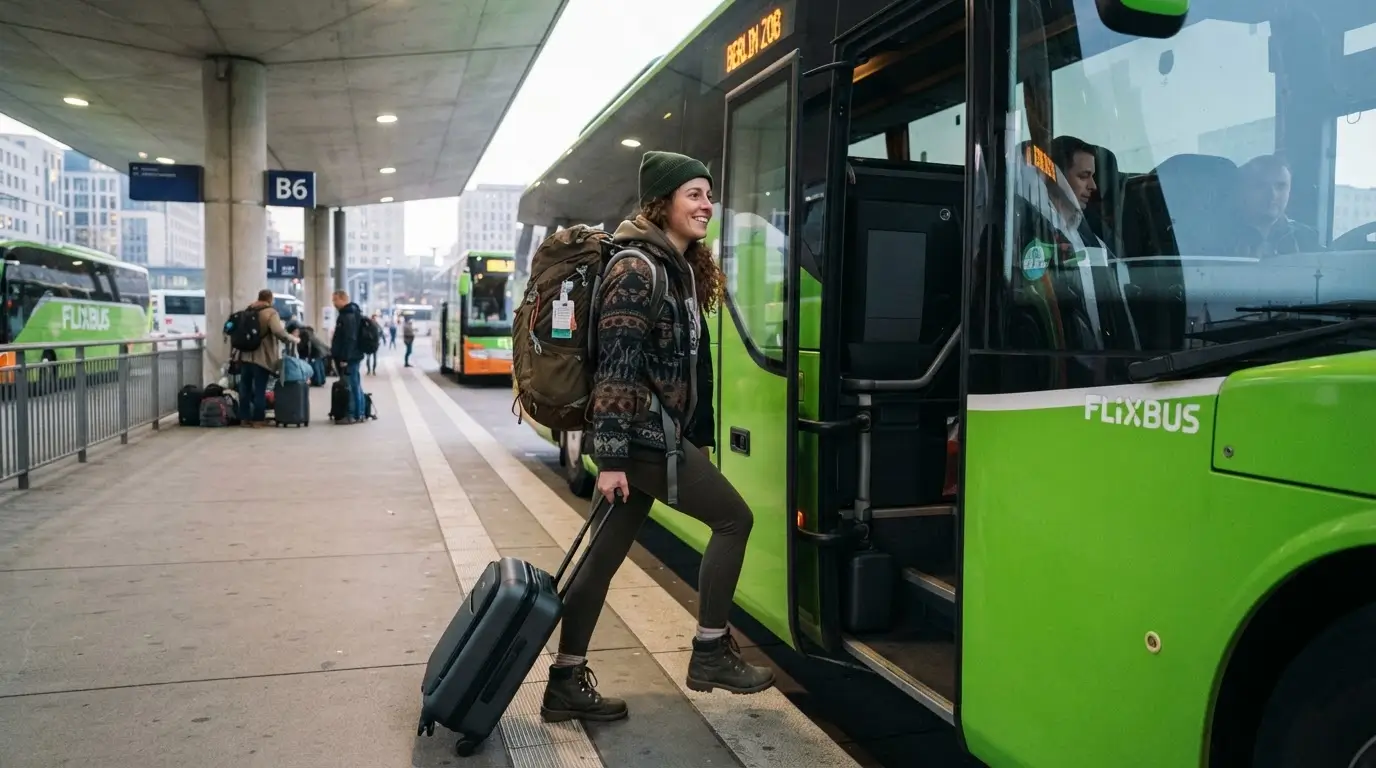
Flights are not the only way to move. In fact, for low income travelers working with tight budgets and flexible schedules, ground transportation is almost always the smarter financial choice for domestic travel and many international routes. The savings are significant enough to change what’s possible entirely.
Greyhound and FlixBus connect hundreds of U.S. cities at prices that regularly fall below $20 one way if booked in advance. A New York to Washington D.C. bus ticket on FlixBus costs $10 to $25 depending on timing. Megabus runs similar routes at similar prices. Amtrak costs more than buses but significantly less than flights on most routes, and the experience of arriving by train into a city center beats every airport-to-downtown commute that exists. In Europe, FlixBus connects cities across the continent for $10 to $30, and Eurail passes on sale offer unlimited train travel at prices that work out dramatically cheaper than individual tickets booked last minute. Ground travel takes longer. It also costs a fraction of the price and removes the airport tax, baggage fee, security theater, and overpriced terminal sandwich from the equation entirely.
3. Eat Where Locals Actually Eat
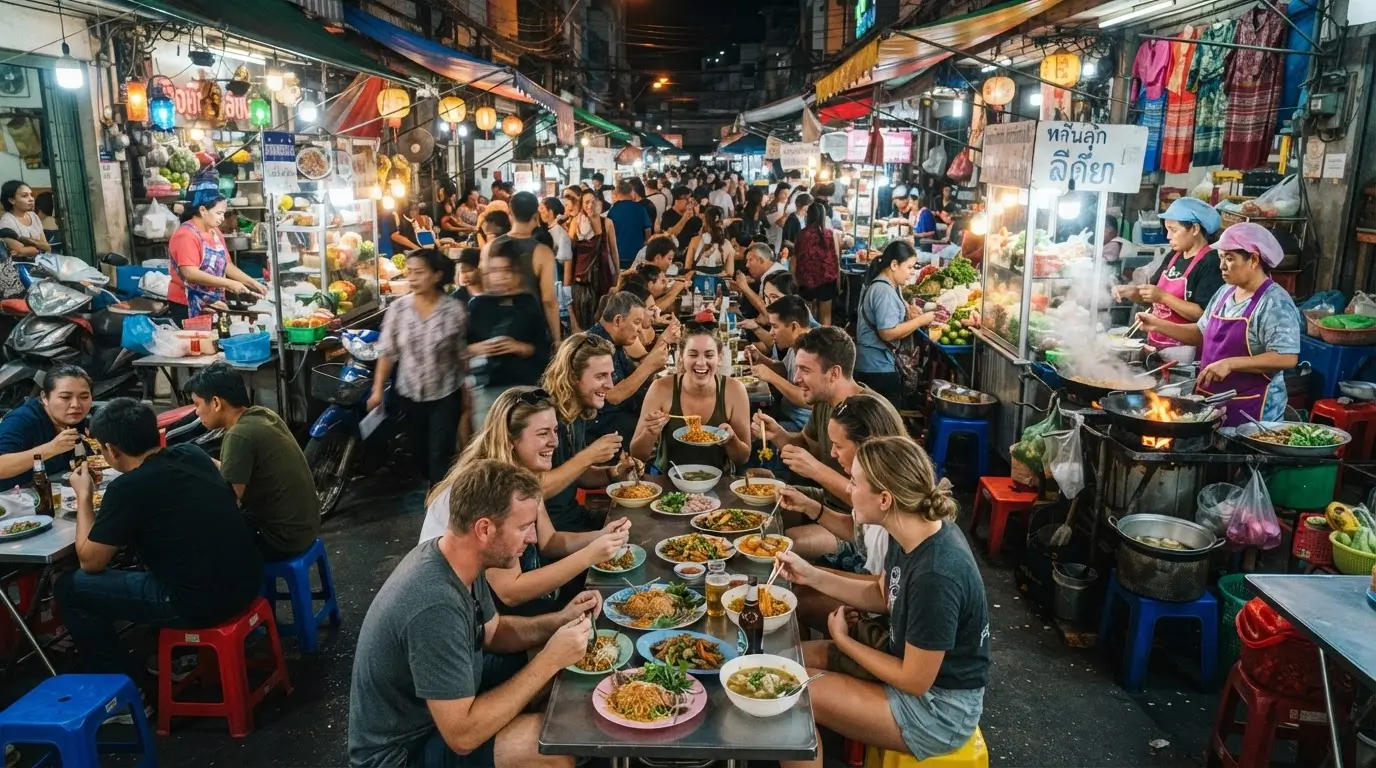
Food is where travel budgets collapse fastest, and it’s entirely preventable. The restaurant with the English menu displayed outside and the photos of every dish is aimed at tourists and priced accordingly. The place two streets over with handwritten specials and all local customers is where you should be eating, and it costs a third of the price for food that’s usually significantly better.
Every destination has a version of this. In Vietnam it’s the plastic stool pho shops that cost $1.50 a bowl. In Mexico it’s the market comedores serving a full three-course comida corrida for $3 to $4. In Portugal it’s the workers’ lunch restaurants called tascas where a full meal with wine costs $8. In the U.S. it’s the taco trucks, the Korean grocery store hot bars, the Vietnamese sandwich shops in non-tourist neighborhoods. Learning to find these places at every destination isn’t just a budget strategy. It’s genuinely better travel that puts you in contact with how people actually live rather than the performance of local culture staged for visitors.
4. Use Couchsurfing and House Sitting Seriously
Accommodation is typically the largest single expense in any travel budget, and eliminating it entirely changes the math of what’s possible on low income completely. Two legitimate platforms make this possible without requiring you to sleep in a car or compromise your safety.
Couchsurfing connects travelers with hosts who offer a free place to sleep in exchange for genuine cultural exchange. The platform works best when you treat it as a connection tool rather than a free hotel booking system. Write detailed, personal requests. Read host profiles thoroughly. Respond to messages quickly and communicate clearly. Hosts who open their homes do so because they enjoy meeting interesting people, not because they want a silent guest who disappears for three days. A genuine Couchsurfing experience often becomes the most memorable part of a trip because you’re staying with someone who actually lives there.
TrustedHousesitters operates differently. You care for someone’s home and pets while they travel, and in exchange you stay for free. Annual membership costs $129, which sounds like a lot until you calculate what one week of accommodation would cost at even a budget hotel. Assignments range from one night to several months, span dozens of countries, and often involve beautiful homes in locations you’d never afford to stay in otherwise. The platform requires building a profile with references, so starting with local or domestic sits builds your record before international opportunities open up.
5. Camp as a Primary Accommodation Strategy
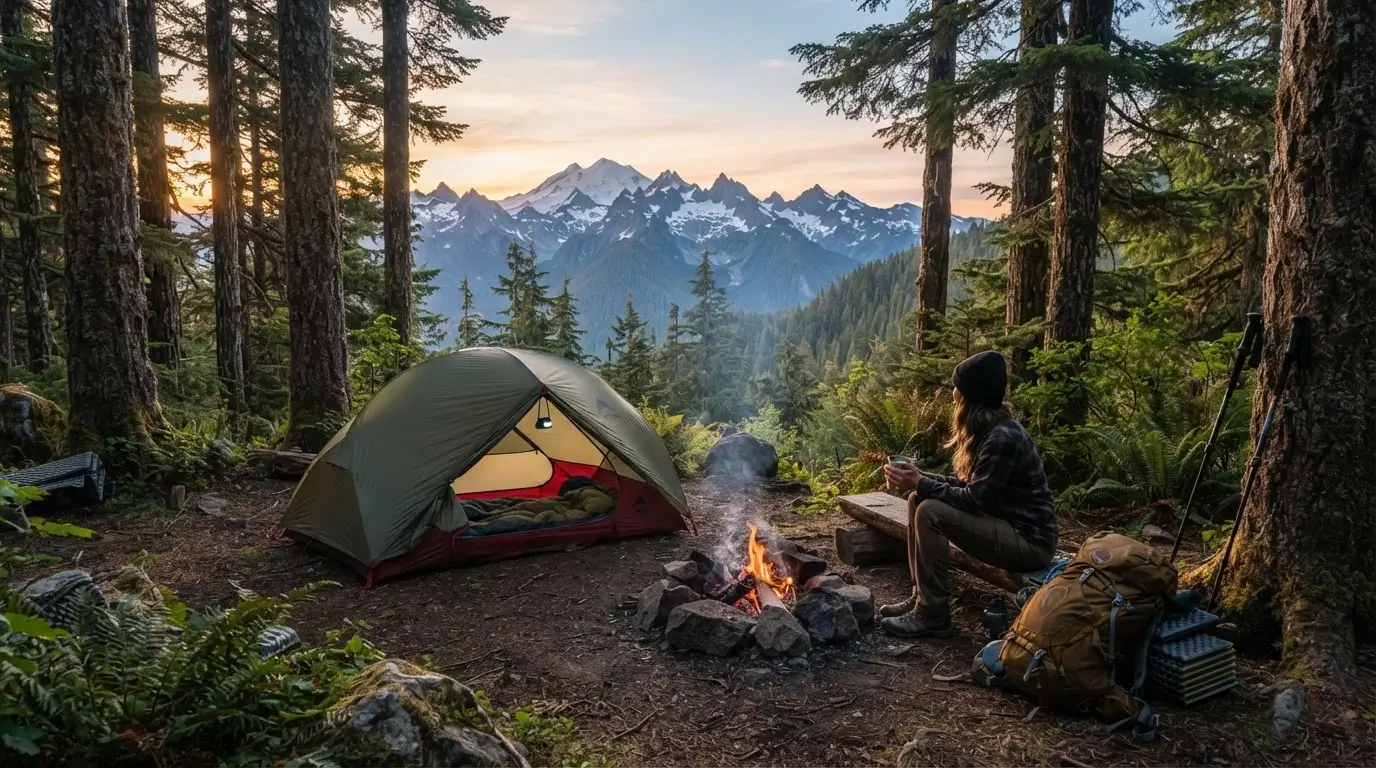
Camping gets dismissed as a budget travel option because people associate it with expensive gear, complicated logistics, and roughing it in ways that feel more punishing than adventurous. The reality is that camping is one of the most accessible, affordable, and genuinely enjoyable accommodation options available to low income travelers who approach it right.
U.S. national forest and Bureau of Land Management land allows dispersed camping for free in most areas. No reservation, no fee, no campground infrastructure, just finding a legal spot on public land and setting up. Freecampsites.net and the iOverlander app map thousands of free legal camping spots across North America. State park campgrounds charge $15 to $30 a night, which splits to $7.50 to $15 per person for two travelers and includes bathroom facilities, often showers, and frequently spectacular locations. For urban travel, apps like Harvest Hosts (requires a membership but provides free overnight stays at wineries, farms, and breweries for self-contained campers) and Boondockers Welcome connect travelers with free overnight spots in populated areas. A basic camping setup costs $100 to $200 for a tent, sleeping bag, and pad, which pays for itself after three or four nights compared to any hotel.
6. Travel Slow to Spend Less
The budget travel paradox that most guides skip: the faster you travel, the more it costs. Constantly moving between destinations means constant transportation costs, constant new accommodation searches, constant meals eaten in unfamiliar places without knowing where the cheap options are. Slow travel inverts this entirely.
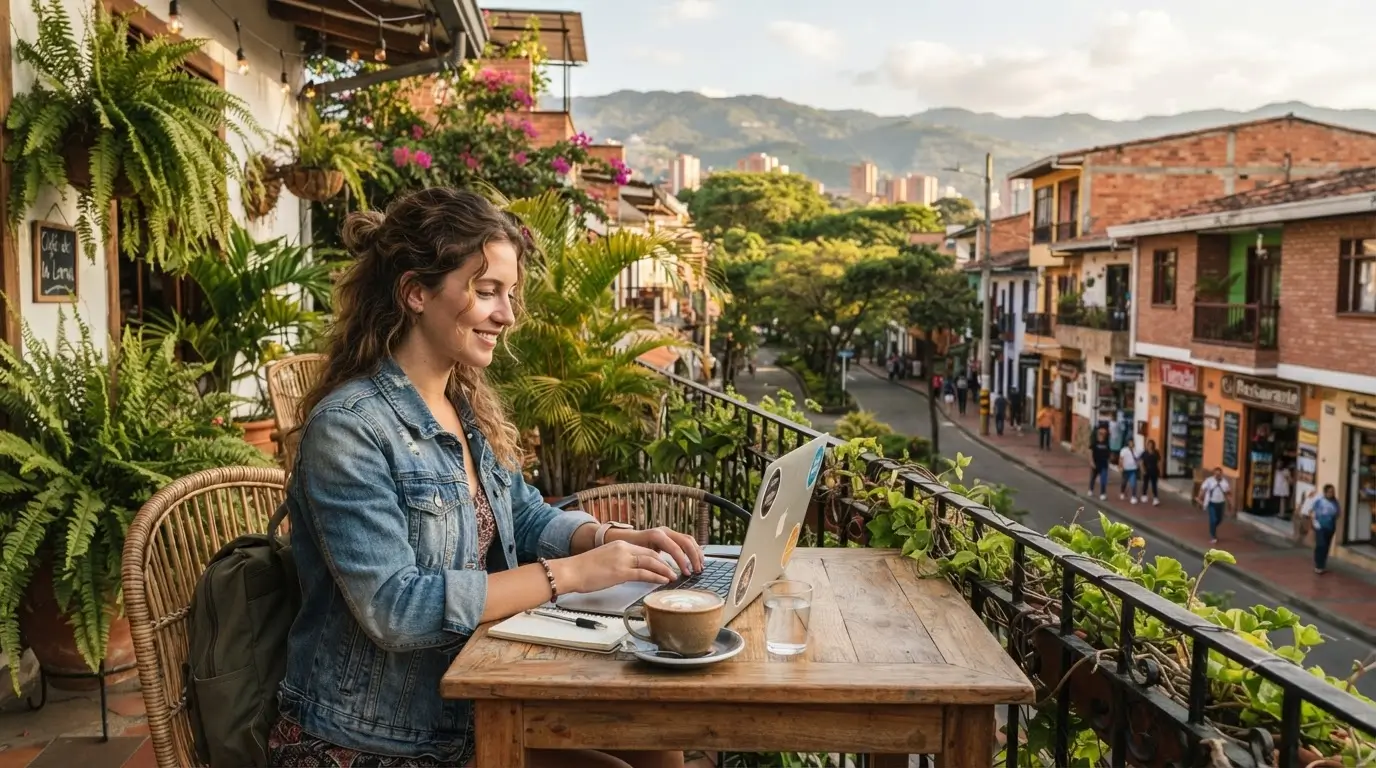
Spending one to two weeks in a single location lets you negotiate weekly rates on accommodation that are significantly lower than nightly rates. It lets you find the cheap grocery store, the good $2 lunch spot, the free park where locals spend their afternoons. It lets you walk everywhere instead of paying for transport because you’ve learned the neighborhood. Weekly Airbnb rates often run 30 to 40 percent less than the equivalent nightly rate multiplied out. Monthly rates drop further still. For low income travelers, slow travel isn’t a compromise. It’s the strategy that makes extended travel financially possible in the first place. One month in Medellín on a slow travel budget costs less than one week in Paris moving fast.
7. Find Free and Cheap Activities Everywhere
The assumption that travel requires spending money on activities is the tourism industry talking. Most of what makes a place genuinely interesting, its neighborhoods, its public spaces, its markets, its street life, its parks, its architecture, its people, costs nothing to experience.
Strategies that work in almost every destination:
- Free museum days: Most major museums offer free admission one day per week or month. Research these before you arrive. The Smithsonian museums in Washington D.C. are always free. The Met in New York operates on a suggested donation basis, meaning you can pay $1 and it’s completely legitimate. The British Museum in London is free every day.
- Free walking tours: Available in almost every major city worldwide, these tip-based tours led by local guides cover neighborhoods and history in two to three hours. Pay what you can genuinely afford. A $5 tip on a free walking tour is honest and acceptable.
- Public markets: Free to browse, cheap to eat at, and one of the most authentic travel experiences available anywhere. Every city has one.
- Public libraries: Underrated travel destinations within destinations. Free Wi-Fi, clean bathrooms, a quiet place to sit, local newspapers, and sometimes free events and exhibits.
- National and state parks: With the America the Beautiful pass at $80 for an annual pass or $20 to $35 per visit, public lands offer some of the most extraordinary landscapes in the world at prices that work for low income travelers.
8. Learn to Find Flights Cheaply When You Need Them
Flights aren’t always avoidable, and when they’re necessary, knowing how to find genuinely cheap ones rather than just slightly discounted ones matters significantly. There’s a difference between a $200 flight and a $400 flight that feels like it’s $200 because it’s on sale.
Google Flights is the starting point. Use the Explore feature to search from your home airport to “everywhere” and sort by price to see what’s cheapest from your location in any given month. Going (formerly Scott’s Cheap Flights) sends email alerts when fares drop dramatically from your home airports. The free tier catches most deals. Skiplagged shows hidden city ticketing options that can drop prices significantly, though airlines discourage this practice and it works best for one-way travel without checked bags. Spirit, Frontier, and Allegiant in the U.S. and Ryanair, Wizz Air, and EasyJet in Europe offer base fares that are genuinely low if you travel carry-on only and book directly through their sites rather than aggregators. The add-on fees for bags, seat selection, and drinks are where budget airlines make their money. Avoid every single one and the base fare is real.
9. Build a Travel Fund With Micro-Saving Strategies
Low income travel is partly about spending less on the road and partly about accumulating the money to get there in the first place. Standard saving advice doesn’t account for budgets where there isn’t obvious excess to redirect. Micro-saving strategies work with smaller margins.
The Acorns app rounds up every purchase to the nearest dollar and invests the difference. It’s not a fast strategy but it’s genuinely painless. A dedicated travel jar where you deposit $5 every time you skip a restaurant meal or $10 from any overtime or side income creates visible, tangible progress that motivates continued saving. Facebook Marketplace and eBay turn unused household items into travel fund contributions. Selling $200 worth of things you’re not using covers a round-trip FlixBus ticket, a week of camping fees, and several days of cheap meals. Travel rewards credit cards require disciplined use but offer real value. The Capital One Quicksilver card earns 1.5 percent cash back on everything with no annual fee, and the Chase Freedom Flex earns 5 percent on rotating categories. Used only for purchases you’d make anyway and paid in full monthly, these cards generate travel funding from regular spending without adding debt.
10. Domestic Travel Is Real Travel
The pressure to go international is a travel industry creation. Domestic travel done thoughtfully, slowly, and with genuine curiosity delivers everything international travel promises: new perspectives, unfamiliar food, different landscapes, cultural contrast, and the particular feeling of being somewhere you’ve never been before.
The United States alone contains more geographic and cultural variety than most countries combined. New Orleans feels nothing like Portland. The Appalachian Trail feels nothing like Joshua Tree. A week in the Mississippi Delta following the blues trail costs $300 to $500 total including a cheap rental car split between two people, campgrounds, and roadside BBQ that represents some of the best food culture in the country. Route 66 from Chicago to Los Angeles on a budget of $50 a day per person is entirely achievable with camping, grocery store meals, and free roadside attractions that are genuinely interesting rather than just cheap. Amtrak’s California Zephyr from Chicago to San Francisco for $150 to $200 one way travels through the Rocky Mountains and Sierra Nevada in a way that no flight ever could and costs a fraction of what the same journey costs by air with any flexibility on dates.
Practical Budgeting for the Road
The gap between planning a low income trip and executing one without running out of money mid-journey comes down to one discipline: knowing your daily number and protecting it.
Calculate Your Real Daily Budget Before You Leave
Add up every expected expense including accommodation, food, transport within your destination, activities, and a 10 percent buffer for unexpected costs. Divide by the number of days you’re traveling. That number is your daily budget. Check against it every evening, not every week. Catching overspending on day two is fixable. Catching it on day eight when you’re out of money is not.
Keep an Emergency Fund Separate and Untouchable
Even on the tightest travel budget, keep $100 to $200 completely separate from your travel spending money. This is not for nice dinners or tempting experiences. It is for a medical situation, a missed bus that requires a taxi, a hostel that’s full and requires finding another option last minute, or any other genuine emergency. Low income travelers who don’t carry this buffer are one bad situation away from a crisis. Treat it as untouchable and you will almost certainly never need it.
Use Cash in Cash-Based Economies
Many budget destinations operate primarily in cash, and using cards in these environments means ATM fees, foreign transaction fees, and exchange rate losses that compound over a trip. The Charles Schwab debit card reimburses all ATM fees worldwide and charges no foreign transaction fees. The Wise card offers near-interbank exchange rates with low conversion fees. Both are free to obtain and save low income travelers real money compared to using a standard bank debit card internationally.
Frequently Asked Questions
What are the cheapest countries for low income travelers to visit internationally?
Vietnam, Cambodia, Bolivia, Georgia, Albania, and Morocco consistently offer the lowest daily costs for international travelers. Vietnam and Cambodia are particularly accessible with daily budgets of $20 to $30 covering a private guesthouse room, three meals, and local transport. Bolivia is the cheapest country in South America. Albania and Georgia offer European culture and landscapes at prices closer to Southeast Asia than Western Europe.
How do low income travelers handle travel insurance on a tight budget?
SafetyWing offers the most accessible travel insurance for low income travelers at roughly $42 per four weeks of coverage for travelers under 40. It covers medical emergencies, evacuation, and some trip interruption scenarios. It won’t cover every scenario that premium policies cover, but it addresses the genuinely catastrophic risks that would financially devastate a low income traveler. Something is significantly better than nothing when a hospital visit abroad can cost thousands.
Can you travel internationally without a credit card?
Yes, though it requires more planning. A Wise debit card or Revolut card provides many of the same benefits as a travel credit card without requiring credit approval. Carry enough cash for your first few days at any new destination in case card access is limited. Book accommodation that accepts cash or PayPal where possible. Travel is possible without credit, it just requires more preparation around payment logistics at each destination.
How do low income travelers deal with visa costs for international travel?
Research visa requirements thoroughly before choosing a destination. Many countries offer visa-free or visa-on-arrival access to U.S., UK, EU, Canadian, and Australian passport holders, which eliminates visa costs entirely. Passport Index and Visa HQ both provide current visa requirement information by nationality. When visas are required, factor the cost into your total trip budget from the beginning rather than discovering it late in the planning process.
What is the single most effective way to reduce travel costs for low income travelers?
Accommodation is the single largest controllable expense in any travel budget, and eliminating or minimizing it creates the most significant financial impact. Combining Couchsurfing, house sitting, camping, and slow travel weekly rental rates can reduce accommodation costs from $50 to $80 a night to $5 to $15 a night or zero, which over a two-week trip represents savings of $500 to $1,000 that can fund the entire trip’s other expenses.
Conclusion
Travel has never belonged exclusively to people with money, even when the industry acts like it does. Every strategy in this guide exists because real people with real financial constraints figured out how to go anyway, and most of them will tell you those trips changed something in them that no amount of staying home ever could. Where have you been wanting to go that felt impossible until right now?