

If you’ve ever searched for travel tips for overthinkers on vacation, you already know the specific torture of planning a trip you’re simultaneously excited about and dreading because your brain won’t stop generating worst-case scenarios. I once spent four hours researching the crime statistics of a Portuguese neighborhood I was visiting for two days. I made laminated emergency contact cards for a domestic weekend trip. I repacked my bag three times the night before a flight because I’d convinced myself I’d forgotten something critical despite having a checklist. None of that kept me safer. All of it made the trip harder to enjoy before it even started. Here’s what actually helps.
1. Understand That Overthinking Is a Feature, Not a Bug
The first travel tip for overthinkers that actually matters isn’t about packing or booking or planning at all. It’s about understanding what’s actually happening in your brain so you can work with it instead of against it. Overthinkers don’t plan excessively because they’re neurotic or weak. They plan excessively because their brains are wired to treat uncertainty as a threat and preparation as protection.
That wiring has genuine value. Overthinkers catch things that casual planners miss. They research neighborhoods, read the fine print on travel insurance policies, notice that the hotel’s “ocean view” is actually a partial view of an ocean from three miles away. The goal isn’t to stop thinking carefully. It’s to establish a point where enough preparation has happened and additional preparation is just anxiety performing as productivity. Recognizing that distinction, the moment where preparation stops being useful and starts being compulsive, is the foundational skill every overthinker needs to develop before the trip, not during it.
2. Create One Master Document and Then Close the Tabs
Overthinkers collect information the way some people collect souvenir magnets: compulsively, in large quantities, with no clear stopping point. The forty-seven browser tabs of restaurant recommendations, the three different maps downloaded in two different apps, the hotel confirmation saved in four separate places “just in case.” All of it creates a cognitive load that makes the trip feel more complicated than it actually is.
Build one single Google Doc or Notion page that contains everything. Flight confirmations, hotel addresses, a shortlist of restaurants you’re genuinely interested in rather than every restaurant that received a positive review since 2019, emergency contacts, and the one or two activities you’ve pre-booked. Once it’s in the document, close the tab it came from. The information exists. You have it. You don’t need to keep the original source open as a backup to the backup. Send the document to one trusted person at home and then stop adding to it at least 48 hours before you leave. A living document that’s still being edited at the airport is an anxiety machine, not a planning tool.

3. Set a Hard Research Cutoff Date
This is the single most practically useful thing an overthinker can do during trip planning. Pick a date, ideally five to seven days before departure, and declare all research finished at that point. No new restaurant additions. No second-guessing the hotel you already booked. No reading one more Reddit thread about whether the neighborhood you’re staying in is “really” safe.
The research cutoff works because it externalizes the decision about when enough is enough, removing it from the moment-to-moment judgment of a brain that will always argue for more information. It’s not that additional research after the cutoff date wouldn’t yield anything useful. It’s that the marginal value of that additional research is far lower than the cost of the anxiety and lost time it generates. Write the cutoff date on a sticky note. Put it somewhere visible. Honor it the same way you’d honor a work deadline, because for overthinkers, it functions the same way.
4. Pack Using a Fixed List, Not a Fresh One Every Time
Creating a new packing list for every trip is an overthinker’s trap because it invites endless reconsideration of decisions that have already been made correctly dozens of times before. Did you need a travel umbrella last time? Then you know whether you’re someone who uses travel umbrellas. Did you ever open that backup power adapter you’ve brought on every trip for six years? Then you know you don’t need it.
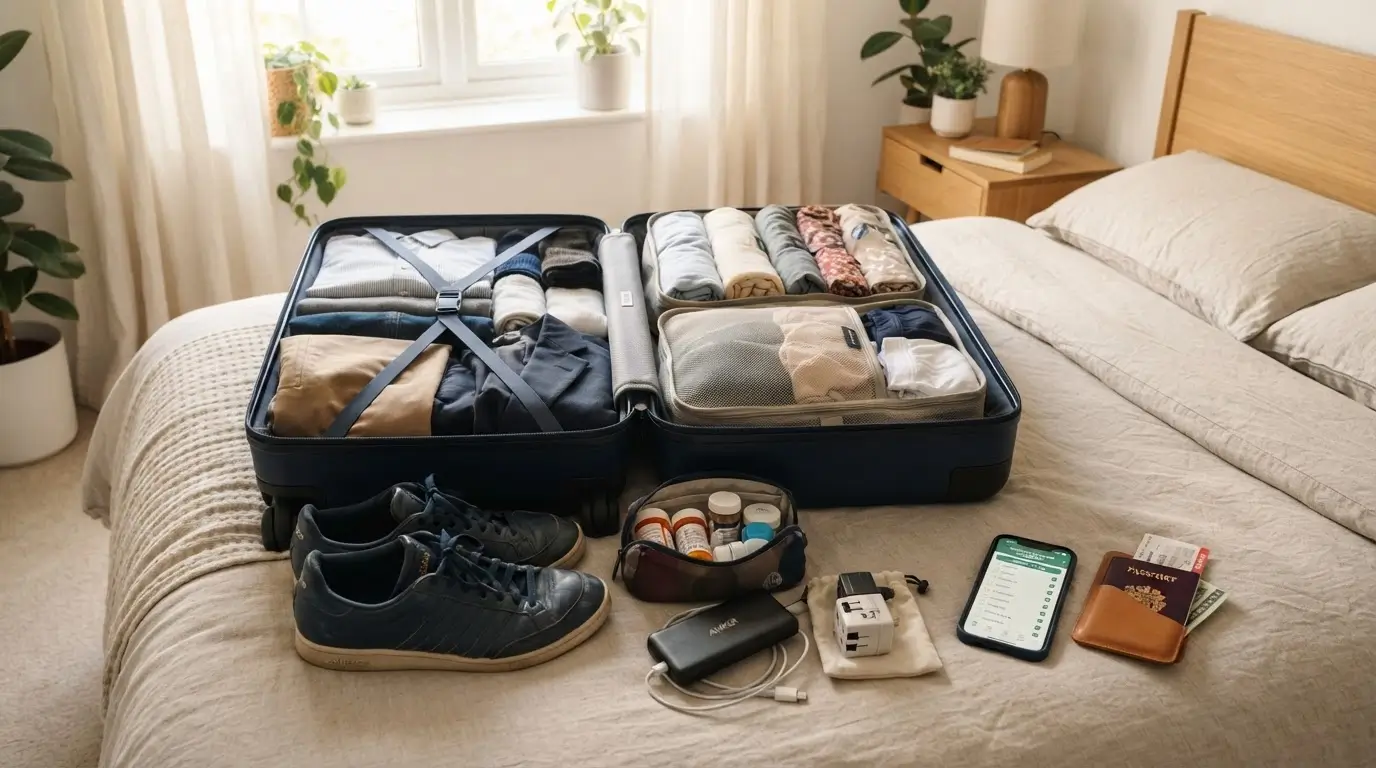
Build a master packing list that lives permanently in your phone’s notes app, refined over multiple trips until it genuinely reflects what you use rather than what you imagine you might need. Before each trip, duplicate the master list and remove items that don’t apply to this specific destination or climate. Never add items based on anxiety. Only add items based on a previous trip where you genuinely needed something you didn’t have. The difference between a packing list built from experience and one built from worry is immediately visible in how heavy your bag is at the airport.
The Core List That Works for Most Trips
For most trips of one to two weeks, the core list that actually gets used looks something like this:
- Enough clothes for five days plus one extra outfit for emergencies
- One pair of shoes you can walk eight miles in comfortably
- Medications in original containers in your carry-on, not your checked bag
- Phone charger, one universal adapter, one portable battery
- One physical copy of your most critical documents tucked separately from your wallet
- Whatever you genuinely read, watch, or listen to when you need to decompress
Everything else is optional.
5. Book the Non-Negotiables and Leave the Rest Open
Overthinkers tend to pre-book everything because unscheduled time feels like uncontrolled time, and uncontrolled time feels like an invitation for things to go wrong. The fully scheduled itinerary feels like safety. What it actually creates is a trip that runs like a corporate agenda and leaves no room for the unexpected discoveries that become the best memories.
Book the things that genuinely require advance booking: flights, accommodation, any specific attraction with timed entry like a popular museum or a sold-out experience. Leave everything else open. Restaurants don’t need to be booked three days in advance in most destinations. Day trips don’t need to be pre-arranged when you can organize them the evening before based on how you’re actually feeling. The psychological contract to make with yourself before the trip is this: the booked items are the skeleton, and the unbooked time is the actual trip. Protecting that unbooked time is not laziness or poor planning. It’s the specific ingredient that makes travel restorative rather than just logistically different from regular life.
6. Have One Specific Plan for When Things Go Wrong
Overthinkers spend enormous mental energy imagining things going wrong without actually preparing a clear, simple response for when they do. The distinction matters. Imagining a missed flight and spiraling into anxiety about it is not the same as knowing specifically what you would do if you missed a flight. The latter takes five minutes of actual thought and eliminates most of the former.
Before every trip, run through three realistic scenarios and decide in advance what you’d do:
- Missed or cancelled flight: I would go to the airline desk, ask about rebooking options, and check my travel insurance for coverage.
- Lost wallet or phone: I would contact my bank’s emergency line (number saved offline), use my backup card, and go to my accommodation for Wi-Fi.
- Medical situation: I would go to the nearest pharmacy for minor issues, and know the address of the nearest hospital or clinic at my primary destination.
Writing these down takes less time than one anxious Google spiral about any of them. Once they’re written, the brain has what it was looking for. It wanted a plan. You gave it one. Most overthinkers find that this specific exercise reduces pre-trip anxiety more effectively than any amount of general reassurance that everything will probably be fine.
7. Build Decompression Time Into Every Single Day
Overthinkers on vacation burn out faster than other travelers because processing new environments, making constant small decisions, and operating outside familiar routine all consume significantly more cognitive energy for people whose brains run hot by default. Ignoring this reality and packing every day with activities is a direct path to being miserable by day four regardless of how beautiful the destination is.
Build a genuine rest window into every travel day. Not a rushed coffee between activities. A real, unscheduled hour or two where the only obligation is sitting somewhere pleasant without looking at an itinerary. A café. A park bench. A hotel balcony. This time serves as pressure release for a brain that has been processing nonstop since the trip started. Overthinkers who protect this time consistently report that they enjoy their trips more, remember them more clearly, and come home feeling restored rather than exhausted. The ones who skip it consistently report the opposite, regardless of how impressive their daily activity list looked.

8. Give Yourself Permission to Do Less Than You Planned
Every overthinker arrives at a destination with a list of things they want to see and experience, and most of them will not get through the entire list. This is normal, universal, and completely fine. It does not mean the trip failed. It means you had a trip that was sized for a human rather than an itinerary.
Deciding in advance which items on your list are genuinely important versus which ones you included because they appeared on every “must see” list you read removes the daily guilt of not checking every box. Rate each planned activity honestly: things you would be genuinely disappointed to miss, things that would be nice but aren’t essential, and things you included because some article said you should. The first category gets protected. The second gets attempted if time and energy allow. The third gets dropped without guilt the moment the trip starts. This one mental exercise, done before departure, eliminates more in-trip anxiety than almost any other strategy because it replaces the vague pressure of “doing everything” with a clear and honest set of actual priorities.
9. Use Your Phone Intentionally, Not Compulsively
Overthinkers and smartphones are a particularly challenging combination on vacation because the phone provides infinite access to reassurance-seeking behavior. Checking reviews of the restaurant you already booked. Reading more articles about the neighborhood you’re already walking through. Looking up weather forecasts for the next four days when you’re currently standing in sunshine. None of this adds value. All of it keeps your brain in planning mode when your body is trying to actually be somewhere.
Set specific phone rules before the trip and write them down somewhere you’ll see them:
- Maps and navigation: use freely
- Emergency communication: use freely
- Photos: use intentionally, not compulsively
- Reviews and research: only before leaving the accommodation each morning, not mid-experience
- News and social media: one designated window per day, not a background habit
Airplane mode during meals, walks, and any experience you specifically wanted to have is a legitimate tool, not an extreme measure. The overthinker’s brain will resist this because checking the phone feels like staying in control. What it actually does is prevent the present moment from registering as real experience, which is the thing you paid for and traveled to have.
10. Debrief After the Trip Instead of During It
Overthinkers have a habit of evaluating their trips while they’re still happening. Was this destination worth it? Should I have gone somewhere else? Did I make the most of today? This real-time evaluation creates a layer of critical observation that sits between you and the actual experience, making it harder to simply be somewhere without simultaneously judging whether being there is going well.
Save the evaluation for after. Give yourself two or three days after returning home before forming any strong opinions about the trip. What feels incomplete or disappointing mid-trip often resolves into something meaningful in retrospect. What feels overwhelming on day three often becomes the most talked-about story by week two. Journaling is a useful tool here, not as real-time trip evaluation but as a place to deposit observations, feelings, and experiences without needing to resolve them into conclusions immediately. The Leuchtturm1917 notebook is compact enough for any bag and good enough to make the writing feel worthwhile rather than perfunctory.
Managing Anxiety Specifically Around Flying
Flying concentrates everything that’s difficult about being an overthinker into a few hours of compressed helplessness, and it deserves its own section rather than a passing mention.
The Night Before Strategy
The night before a flight is peak anxiety time for most overthinkers. Resist the urge to recheck everything one final time. Your bag is packed. Your documents are where you put them. Rechecking does not make them more there. Instead, set every alarm you need, lay out everything you need in the morning in the order you’ll use it, and then deliberately engage with something absorbing that has nothing to do with travel. A film, a novel, a long phone call with someone who makes you laugh. The goal is to give your brain a legitimate alternative to catastrophizing rather than just telling it to stop.
At the Airport
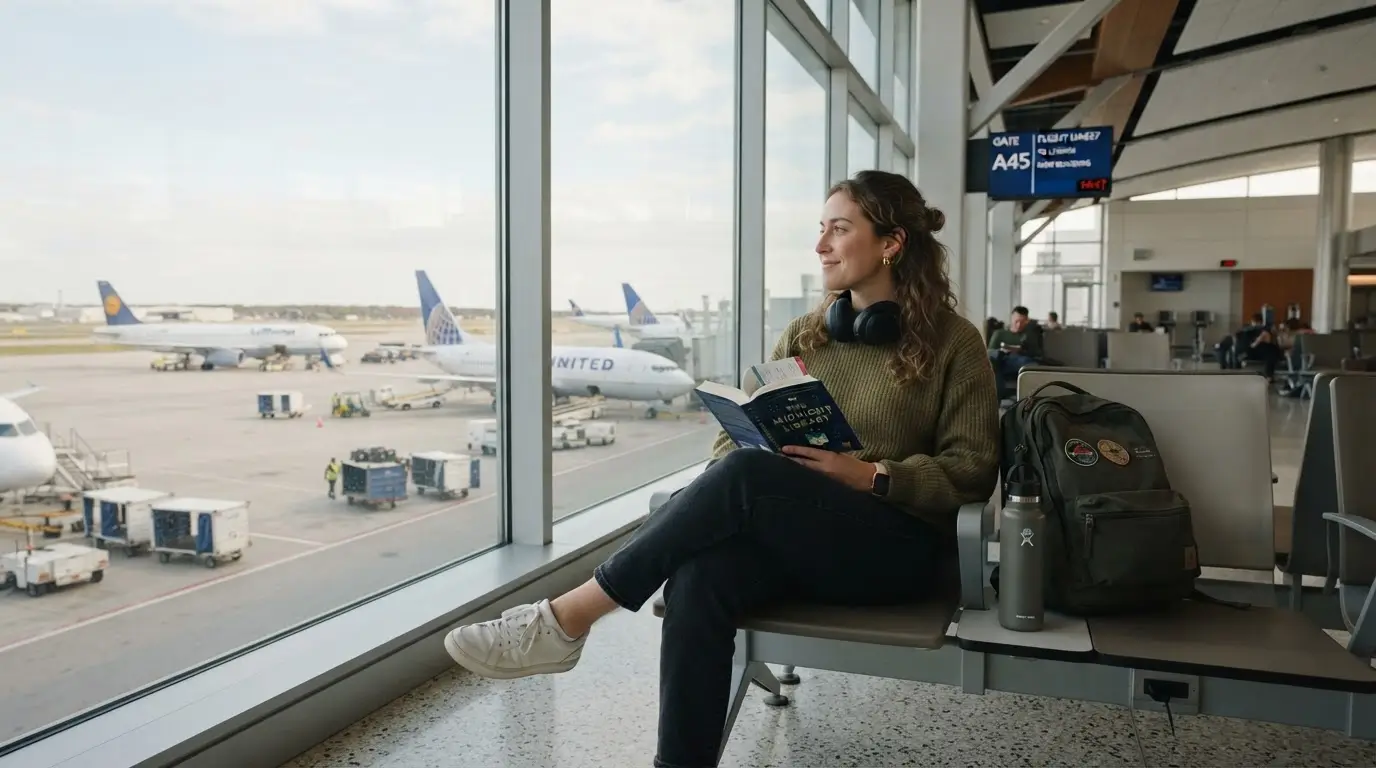
Arrive with enough buffer time that you’re not rushing, because rushing is the specific condition that turns manageable overthinking into full anxiety. Once through security, find your gate, confirm the flight information once, and then stop monitoring the departures board. It will not change faster because you’re watching it. Buy a water bottle, find a seat away from the loudest areas of the terminal, and treat the wait as protected reading or podcast time rather than vigilance time.
Frequently Asked Questions
Why do overthinkers struggle more than other people on vacation?
Vacation removes the familiar structure and routine that overthinkers use to manage their anxiety in daily life. New environments, constant small decisions, and unpredictable schedules all increase cognitive load for brains that are already running at high capacity. The good news is that the same thoroughness that makes overthinkers anxious travelers also makes them exceptionally well-prepared ones when the energy is channeled into the right strategies.
How do overthinkers stop worrying about safety while traveling?
Concrete preparation beats abstract reassurance every time. Research the specific neighborhood you’re staying in using recent traveler reviews rather than general country safety statistics. Know the address of your accommodation and the nearest hospital. Share your itinerary with one person at home. Carry your important documents in two separate locations. Once these specific steps are done, additional safety research is anxiety rather than preparation, and recognizing that distinction is what creates actual peace of mind.
What travel destinations work best for overthinkers?
Destinations with clear infrastructure, easy navigation, and low decision fatigue work best. Japan tops most lists because its organization, cleanliness, and clear signage reduce the ambient uncertainty that feeds overthinking. Portugal and New Zealand suit overthinkers for similar reasons. Closer to home, national parks with well-marked trails and clear visitor information reduce the number of in-the-moment decisions required significantly.
How do overthinkers handle unexpected changes to travel plans?
Having a pre-decided response plan for common disruptions, as described in the tip above, reduces the panic that unexpected changes trigger. Beyond that, reframing disruptions as the actual travel experience rather than interruptions to it helps significantly. The missed train that led to a conversation with a local, the closed museum that sent you to a neighborhood you wouldn’t have found otherwise. Overthinkers who collect these stories start to genuinely trust that things going sideways doesn’t mean things going wrong.
Should overthinkers travel solo or with a companion?
Both work, but they solve different problems. Solo travel eliminates the social negotiation and compromise that can exhaust overthinkers who are already managing significant internal noise. Traveling with the right companion, someone patient, flexible, and comfortable with your planning style, provides grounding when anxiety spikes and shared decision-making that reduces cognitive load. The wrong companion makes everything harder. Choose based on the specific person, not the general category.
Conclusion
Overthinking doesn’t disqualify you from travel. It just means you need slightly different tools than the “just wing it” crowd, which is fine because their approach was never going to work for you anyway. The trip is worth taking, the destination is worth seeing, and your brain, properly directed, is actually one of your greatest travel assets. What’s the trip you’ve been overthinking the longest?