

Finding solid travel planning tips for gluten free travelers that actually go beyond “just bring snacks” is harder than it should be. I was diagnosed with celiac disease at 24, right in the middle of my most ambitious travel phase, and my first instinct was that my adventurous eating days were finished. They weren’t. But the learning curve was steep, occasionally embarrassing, and once involved a very bad night in Barcelona after trusting a waiter who clearly had no idea what gluten was. Here’s what actually works.
1. Research the Local Food Culture Before You Pack
Understanding what a country’s cuisine is built on changes everything before you even leave home. Some food cultures are naturally gluten friendly without trying to be. Others are absolute minefields where soy sauce goes into everything and cross-contamination is never a thought anyone has had.
Japan, Mexico, and India are generally safer starting points because their staple ingredients, rice, corn, and lentils, are naturally gluten free. France and Italy sound terrifying but are increasingly gluten aware. The UK has some of the best celiac labeling laws in the world. Knowing the baseline food culture of your destination tells you how much extra vigilance you’ll need to pack alongside your regular luggage.
2. Learn the Key Phrases in the Local Language
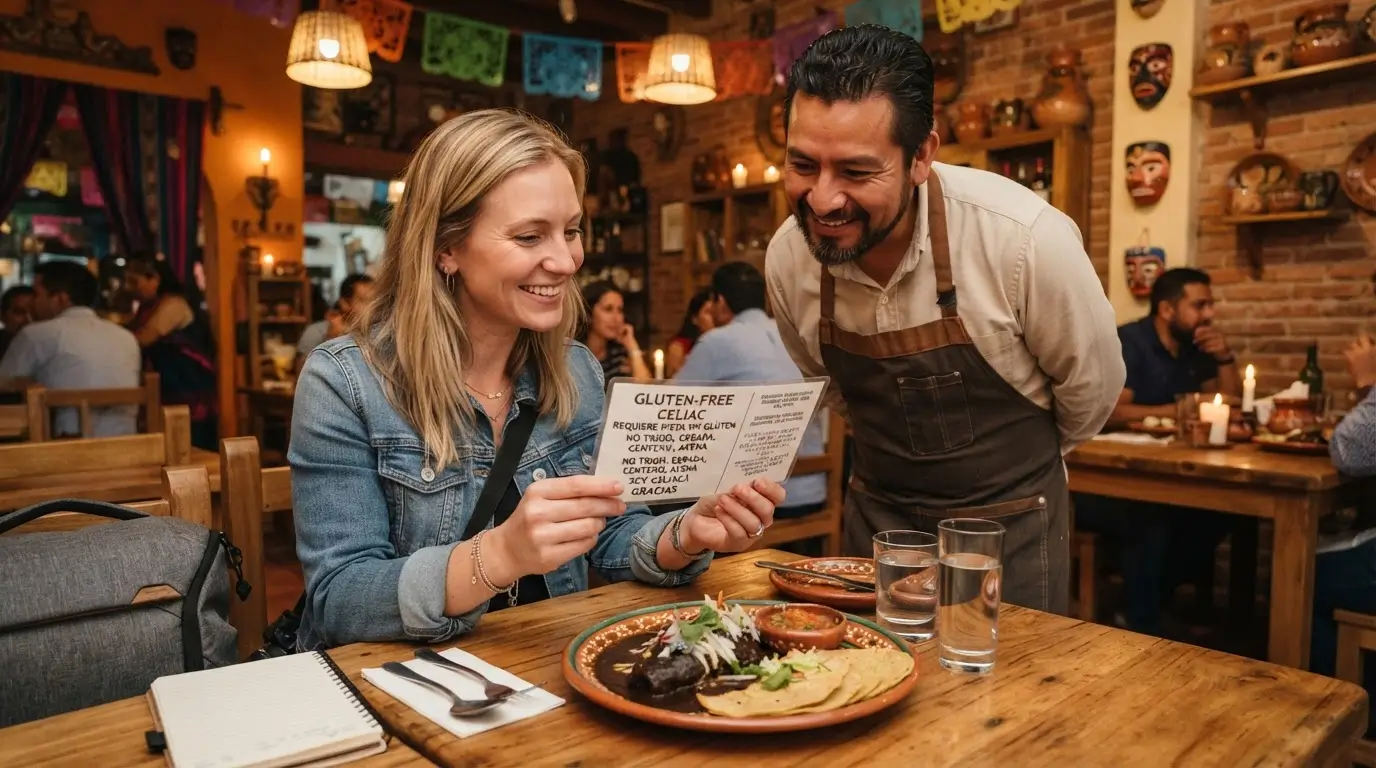
Handing a restaurant server a card that says “I have celiac disease and cannot eat gluten” in their native language is one of the most effective travel planning tips for gluten free travelers that exists. It sounds simple. It genuinely saves you from bad meals and worse nights.
Celiac Travel (celiactravel.com) offers free printable translation cards in over 50 languages. You select your destination, download the card, and either print it or screenshot it on your phone. The cards explain not just gluten but cross-contamination, which is the part most restaurant staff miss when they assume “no bread” covers everything. I’ve used these cards in Thailand, Spain, and Colombia and they’ve started more helpful conversations than any amount of charades ever did.
3. Book Accommodation With a Kitchen When Possible
This tip keeps showing up in travel advice for good reason. Having access to a kitchen gives gluten free travelers a level of control that no restaurant can fully replicate. You can shop at local markets, cook simple meals with ingredients you’ve personally checked, and stop worrying every time you sit down to eat.
Airbnb and Vrbo make it easy to filter for properties with full kitchens. Even a kitchenette with a two-burner stove and a small fridge changes the game significantly. I spent two weeks in Portugal once, cooking breakfast and lunch in my rental and only eating out for dinner. My stomach was the happiest it had been on any trip. The freedom of knowing at least two meals a day are completely safe is worth more than any hotel breakfast buffet.
4. Use the Right Apps Before and During Your Trip
Technology has genuinely made gluten free travel easier than it was even five years ago. There are apps built specifically for finding safe restaurants and connecting with local celiac communities, and they work surprisingly well in most major cities and tourist destinations.
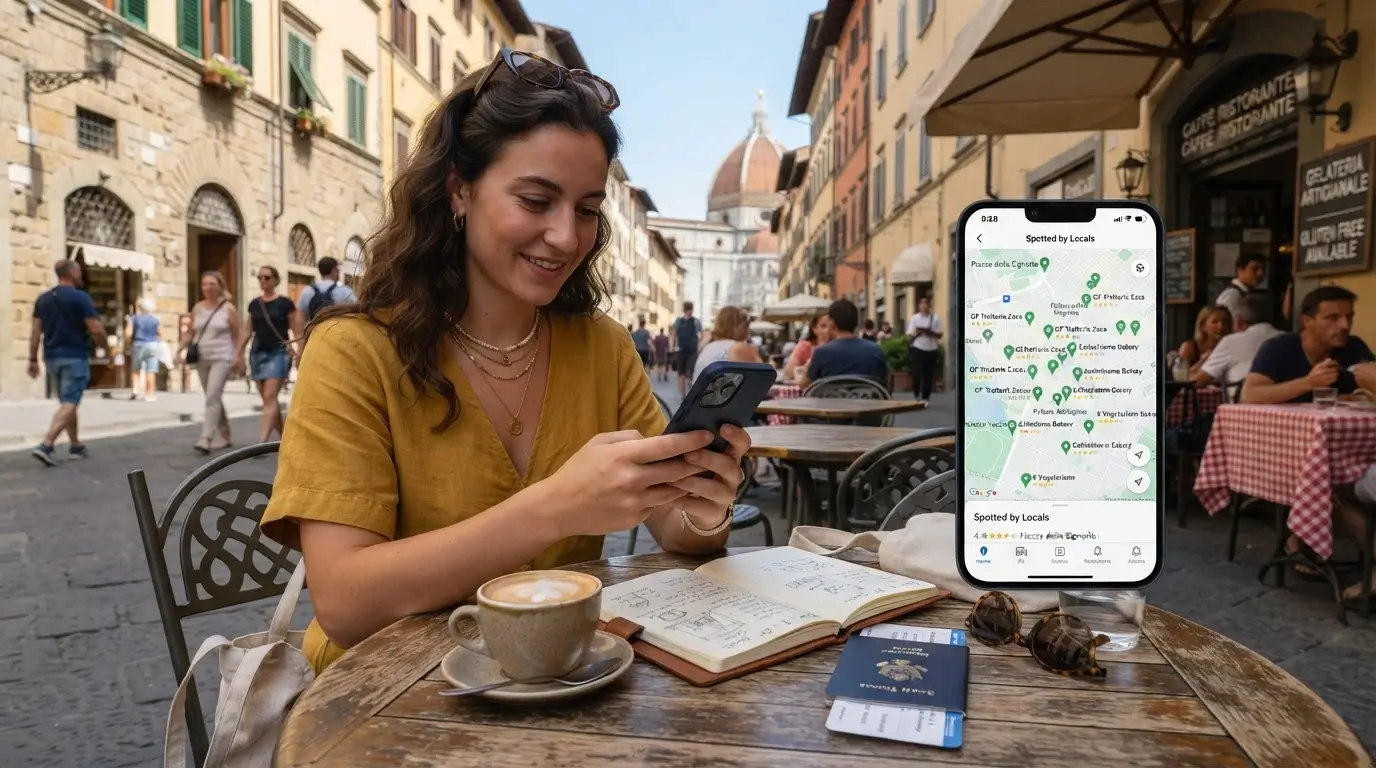
Find Me Gluten Free is the one I use most. It aggregates user reviews from gluten free and celiac travelers specifically, so you’re getting feedback from people with actual stakes in the information. Yelp works too but requires more filtering. For ingredient checking, Yuka scans packaged food barcodes and flags gluten-containing ingredients instantly, which is a lifesaver in foreign supermarkets where you can’t read the label. Download everything before you leave and save offline maps of your destination with marked safe restaurants.
5. Contact Restaurants Ahead of Time
Walking into a busy restaurant and trying to explain celiac disease to a stressed server mid-dinner rush is not a winning strategy. Emailing or messaging ahead gives the kitchen time to actually think through your needs, check ingredients, and sometimes prepare something that isn’t even on the menu.
Most restaurants respond well to a polite, specific message that explains celiac disease rather than a gluten preference. Mention that cross-contamination matters, that shared fryers are a problem, and that you’re genuinely excited to eat there. Restaurants that care about their guests will respond enthusiastically. Restaurants that don’t respond or brush it off just saved you from a miserable experience. Either way, you win.
6. Pack a Smart Gluten Free Travel Kit
Bringing the right supplies from home isn’t about being pessimistic. It’s about being prepared for the moments when safe food simply isn’t available, because those moments happen on every trip regardless of how well you plan.
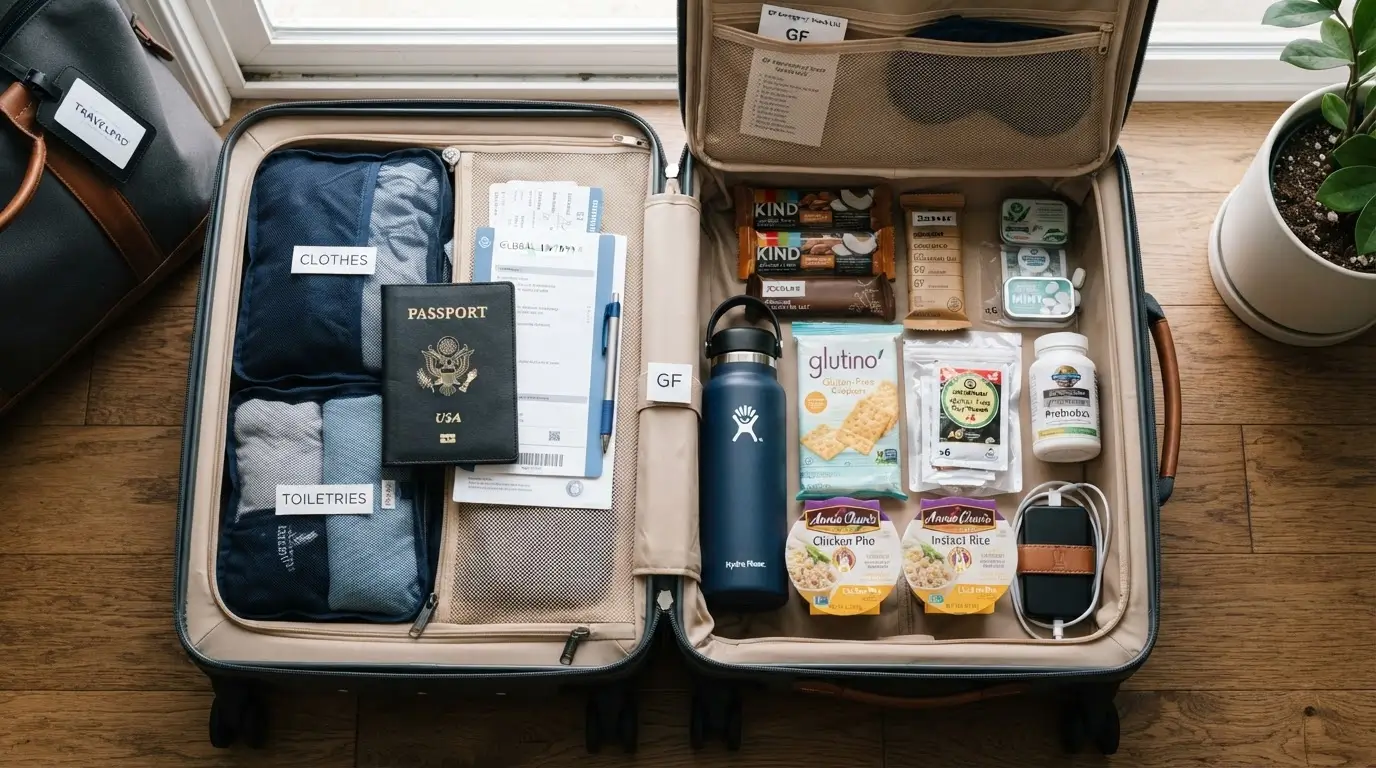
My travel kit always includes:
- Individual packets of gluten free oats or instant rice cups
- A few RXBAR or Larabar protein bars with simple, clearly labeled ingredients
- Gluten free soy sauce packets (San-J makes small travel ones, perfect for Asian destinations)
- A small container of gluten free crackers
- Digestive enzymes like GliadinX, not a cure for accidental gluten exposure but helpful for minor cross-contamination situations
None of this replaces real meals. It fills the gaps when you’re stuck at an airport, on a long bus ride, or in a town where every restaurant serves pasta and bread and nothing else.
7. Choose Gluten Friendly Destinations Strategically
Some countries just make gluten free travel significantly easier than others, and factoring this into your destination choice is a legitimate and smart travel planning tip for gluten free travelers at any experience level.
Naturally Gluten Friendly Countries
Mexico is one of the best destinations for celiac travelers because corn tortillas are the foundation of the cuisine. Tamales, tacos, enchiladas, and most street food are naturally made without wheat. Always confirm no flour tortillas are used and watch for shared cooking surfaces, but the baseline is very manageable.
Japan is another excellent choice despite the soy sauce situation. Rice is the foundation of almost everything, and Japanese food culture takes dietary requirements seriously. Dedicated gluten free soy sauce (tamari) is widely available, and many restaurants in Tokyo and Kyoto now clearly label allergens on menus following updated Japanese food labeling laws.
India’s enormous vegetarian and vegan food culture means rice, lentils, and naturally gluten free dishes dominate many regional cuisines. South Indian food in particular, think dosas, idli, and sambar, is largely wheat free. Always check for atta (wheat flour) in bread-based dishes and be cautious with street food where cross-contamination is harder to control.
8. Never Assume “Gluten Free” Means Celiac Safe
This is the one that catches people off guard most often. A restaurant can market itself as gluten free friendly and still pose serious risks for celiac travelers if they’re using shared pans, shared water for pasta, shared fryers, or handling gluten products in the same kitchen space.
When you arrive at any restaurant, ask specifically about cross-contamination practices, not just ingredients. Does the kitchen have a dedicated gluten free prep area? Do they change gloves? Do they use separate utensils? A knowledgeable server should be able to answer these questions without hesitation. If they look confused or wave it off with “oh we have a gluten free menu,” dig deeper. Your health is worth one slightly awkward conversation.
9. Join Online Gluten Free Travel Communities
The gluten free travel community online is genuinely one of the most useful resources available, and most first-time gluten free travelers have no idea it exists. Real people sharing real restaurant recommendations, translated cards, destination-specific advice, and honest warnings about places that caused them problems. That’s valuable information you can’t always find in a guidebook.
Reddit’s r/celiac community has country-specific threads with detailed advice. Facebook groups like “Gluten Free Travel” connect thousands of celiac travelers who post regularly about their experiences in specific cities and restaurants. Instagram hashtags like #glutenfreetraveler surface recent posts from people currently traveling, which gives you up-to-date information that review sites sometimes lag behind on. Spend an hour in these communities before any new trip and you’ll leave with a shortlist of safe restaurants that took other people years to find.

10. Have an Honest Conversation With Your Doctor Before Long Trips
This one feels obvious but gets skipped more than it should. If you have celiac disease and you’re planning a trip longer than a week, especially to a destination where safe food access is less certain, checking in with your gastroenterologist before you leave is worth the appointment.
They can advise on managing accidental exposure, update any prescriptions you might need, and sometimes recommend destination-specific precautions. Some doctors also write letters explaining celiac disease in medical terms, which can be useful at international customs when traveling with specialized foods or supplements. Traveling with a chronic condition managed well is completely doable. Traveling with one that’s been ignored is a different story.
Tips for Surviving Gluten Free at Airports
Airports are where gluten free travel plans go to fall apart. The combination of time pressure, limited options, and overpriced food courts creates real problems for celiac travelers who didn’t plan ahead.
Research Your Layover Airports in Advance
Major hubs like Amsterdam Schiphol, Singapore Changi, and London Heathrow have dedicated gluten free options and staff trained in allergen awareness. Smaller regional airports often have nothing. Knowing which airports you’re transiting through and what options exist (check the airport’s website or Google the terminal food maps) lets you plan your eating schedule around your actual options rather than hoping for the best.
Always Eat Before You Leave for the Airport
This sounds almost too simple, but eating a solid, safe meal at home before your travel day starts means you’re not arriving at the airport hungry and desperate. Hunger makes people take risks with food they wouldn’t normally take. A full stomach gives you patience and options.
Frequently Asked Questions
What are the best travel planning tips for gluten free travelers visiting Europe?
Research each country individually because celiac awareness varies widely. The UK, Ireland, and Scandinavia have strong labeling laws and high awareness. Italy has a surprising number of dedicated gluten free restaurants, especially in larger cities. Always carry translated celiac cards, use Find Me Gluten Free to locate safe restaurants, and book accommodation with kitchen access when possible.
How do I explain celiac disease to a restaurant in another country?
Use pre-translated celiac travel cards from celiactravel.com rather than trying to explain verbally. The cards cover both ingredients and cross-contamination in the local language. Present the card at the start of your visit before ordering anything. Follow up with a direct question about whether the kitchen can safely accommodate you, and trust your instincts if the response feels uncertain.
Is it safe for celiac travelers to eat street food abroad?
It depends entirely on the destination and the specific food. Mexican street food based on corn tortillas, Japanese onigiri made with plain rice, and Indian dosas made from rice and lentil batter can all be safe options. The risk comes from shared cooking surfaces, unknown marinades, and sauces that may contain wheat. When in doubt, watch how the food is prepared before ordering and ask about ingredients specifically.
Which destinations should gluten free travelers avoid?
No destination is completely off-limits, but some require significantly more effort. Countries where wheat-based noodles or bread are in almost every dish, like parts of China or Eastern Europe, demand more research and preparation. This doesn’t mean you can’t go. It means you need a more detailed plan, more translation cards, and more self-catering built into your itinerary before you arrive.
What should I do if I accidentally eat gluten while traveling?
Stay hydrated, rest as much as your itinerary allows, and take any supplements your doctor has recommended for accidental exposure. Don’t push through sightseeing when your body needs recovery time. Note the restaurant and dish for future reference so you can warn others in gluten free travel communities. Most importantly, don’t let one bad experience derail the rest of your trip.
Conclusion
Gluten free travel has a learning curve, but once you build your system, it stops feeling like a limitation and starts feeling like just another part of how you travel. The destinations are still out there, the good meals are still out there, and the experiences are completely worth the extra planning. Have you found a destination or restaurant that genuinely surprised you with how well they handled gluten free needs?