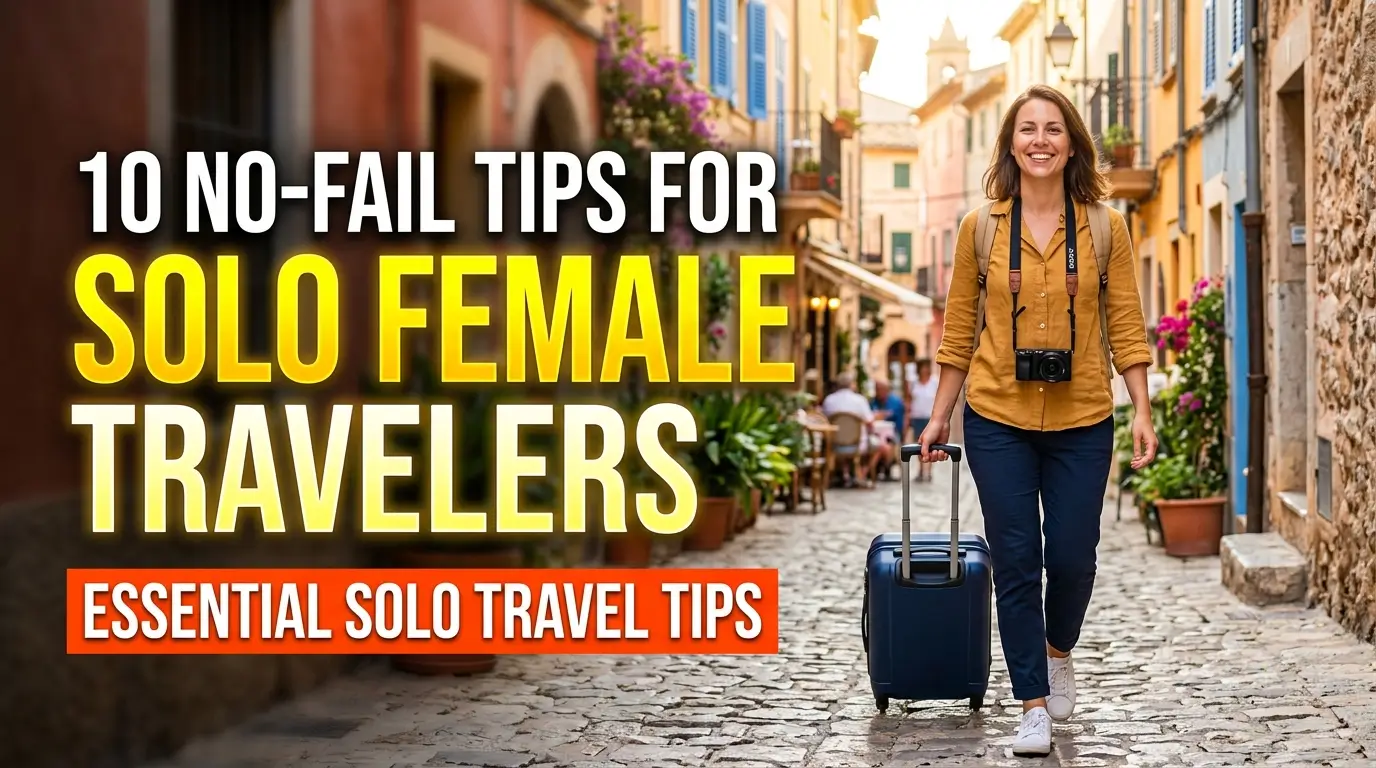
The best travel tips for solo female travelers start with the one piece of advice that actually matters most: stop waiting. Stop waiting for a friend whose schedule aligns. Stop waiting until you feel ready, until you’ve saved enough, until the timing is perfect, until you’re braver than you currently feel. I took my first solo trip at 27 after two years of waiting for various people to commit to various plans, and I spent the entire flight to Lisbon convinced I’d made a terrible mistake. I hadn’t. That trip changed the entire trajectory of how I move through the world, and every solo trip since has added something I couldn’t have found any other way. Here is everything I wish someone had handed me before that first flight.
1. Choose Your First Solo Destination Deliberately
Your first solo trip sets the emotional template for every one that follows, which means choosing a destination that matches your current comfort level rather than your aspirational one matters more than most people acknowledge. A challenging, logistically complex first trip that goes sideways doesn’t prove you’re not a solo traveler. It just proves you chose wrong for round one.
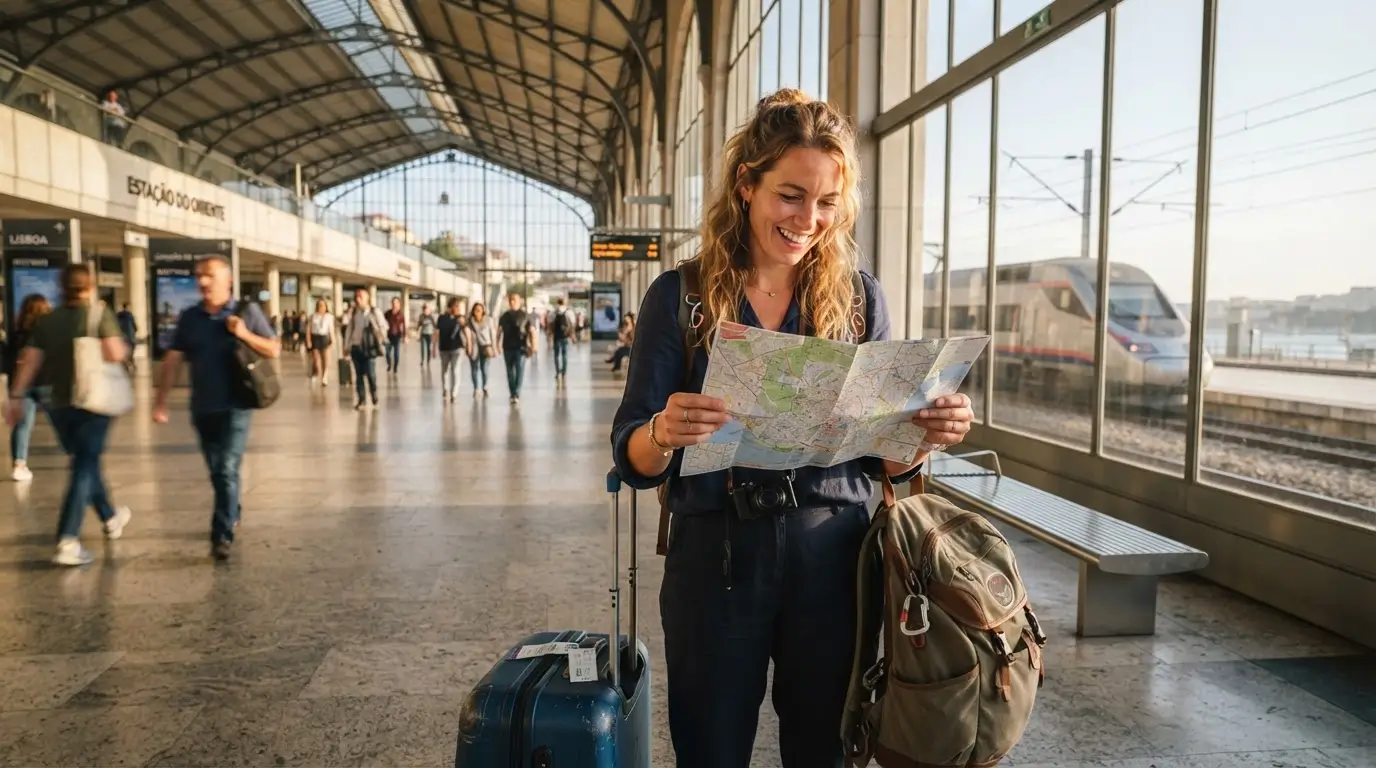
For solo female travelers taking their first trip, the criteria are specific. Strong English infrastructure so language barriers don’t compound every other new challenge. Low street harassment culture so you can walk freely without constant vigilance draining your energy. Good public transit so you’re not dependent on private cars or rideshares for every movement. And enough other travelers in the mix that you’re never the only person figuring things out alone. Portugal, Japan, New Zealand, Iceland, and Ireland consistently top the list for solo female first trips for exactly these reasons. All five deliver genuine travel experiences without stacking unnecessary difficulty on top of the already significant adjustment of traveling alone for the first time.
2. Tell More People Than You Think You Need To
The instinct for many solo female travelers, especially early on, is to minimize how many people know the details of their whereabouts. Sometimes this comes from not wanting to worry family members. Sometimes it comes from the vague sense that broadcasting your solo status creates vulnerability. Both instincts are understandable and both are worth examining honestly.
Telling the right people the right information is not the same as broadcasting your movements publicly. Before every trip, share your complete itinerary with at least two trusted people at home. Not just “I’m going to Portugal.” The hotel name, the neighborhood, the flight numbers, the dates, and a check-in schedule that means if they haven’t heard from you by a certain time, they know something is wrong. TripIt automatically organizes travel confirmations into a shareable itinerary that you can send with one link. Life360 allows real-time location sharing with selected contacts who you choose and trust. Neither of these tools broadcasts your location publicly. Both give people who care about you the information they’d need if something went genuinely wrong, which is exactly the point.
3. Trust Your Instincts Without Negotiating With Them
Every experienced solo female traveler has a version of this story: a situation that felt slightly off, a voice that said leave, and a moment of deciding whether to listen to it or talk herself out of it to avoid seeming rude or paranoid. The ones who listened are always glad they did. The ones who negotiated with that voice sometimes wish they hadn’t.
Female socialization trains women to override discomfort to avoid causing offense. Travel asks you to unlearn that specific habit faster than almost any other environment. Your instincts are data. When a situation feels wrong, when a person’s behavior shifts in a way you can’t immediately articulate but can immediately feel, when a location stops feeling safe, you don’t owe anyone an explanation for leaving. You don’t need to justify the feeling to yourself or to anyone else before acting on it. Walk back into a restaurant and wait. Ask the hotel front desk to call you a different cab. Move to a different train car. Cross the street. None of these actions require certainty. They require listening to information your brain is already providing.
4. Research Safety Specifically, Not Generally
Googling “is [country] safe for solo female travelers” returns results ranging from useless reassurance to breathless fear-mongering, and almost none of it is specific enough to actually inform decisions. Safety is not a country-level characteristic. It is a neighborhood-level, time-of-day-level, situation-specific characteristic that varies more within a city than it does between most countries.
Research safety the way locals think about it. Reddit’s r/solotravel and r/TravelNoProblem have destination-specific threads where actual recent travelers describe specific neighborhoods, specific situations, and specific precautions rather than country-level generalizations. Lonely Planet’s Thorn Tree Forum has been collecting destination-specific safety information from travelers for decades. Local Facebook groups for expats and long-term residents in your destination city give you current, granular information about which areas to avoid after dark, which taxi services are trustworthy, and which tourist scams are currently operating. This level of specificity is what actually changes your behavior and your safety outcomes. General reassurance changes neither.
5. Build a Safety Toolkit That Travels With You Every Time
Physical safety tools for solo female travelers exist on a spectrum from the widely useful to the legally complicated depending on destination. Knowing what’s appropriate, legal, and genuinely effective in your specific destination matters more than defaulting to a one-size-fits-all approach.
The core toolkit that works everywhere:
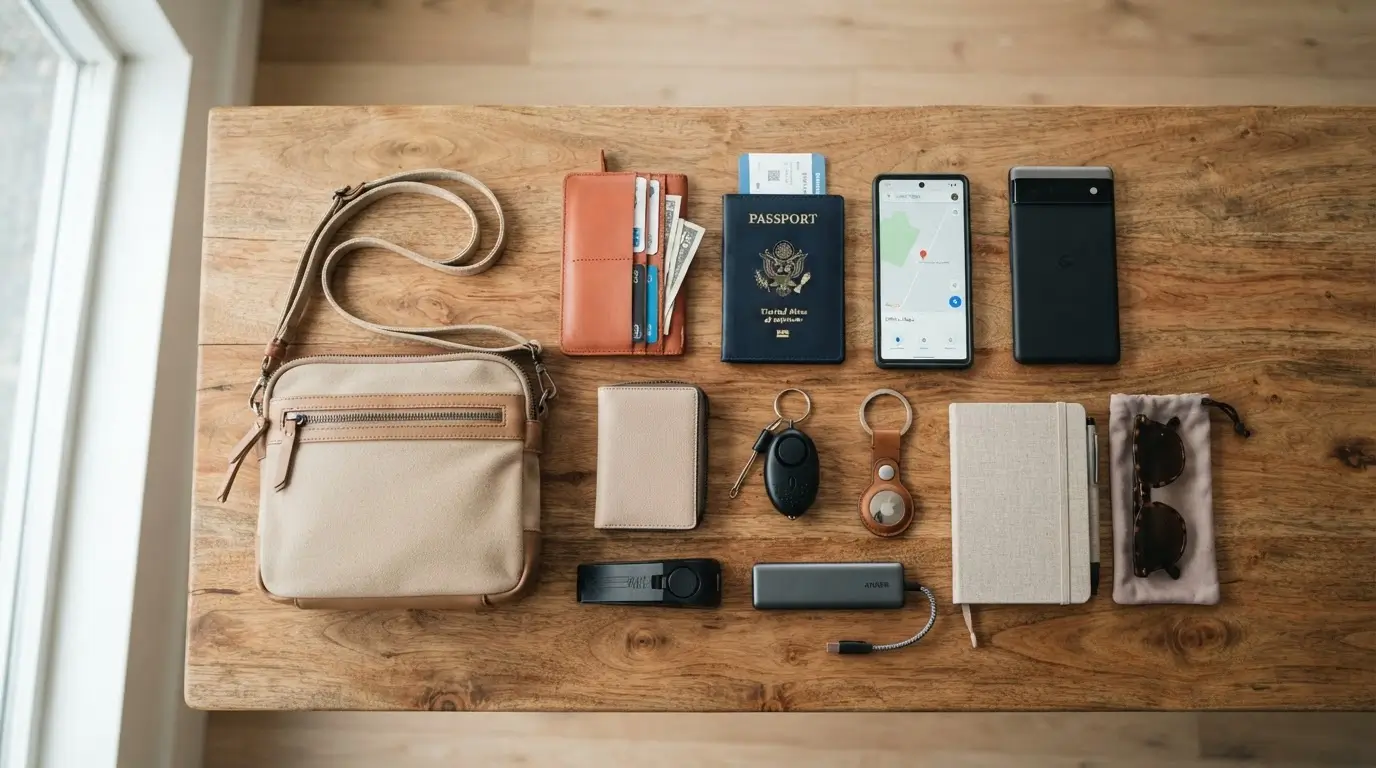
A personal safety alarm like the She’s Birdie or ROBOCOPP emits 130 decibels when activated, requires no skill to use, and is legal in every country. It attracts immediate attention in any populated area without requiring any confrontation on your part. It costs under $30 and weighs almost nothing.
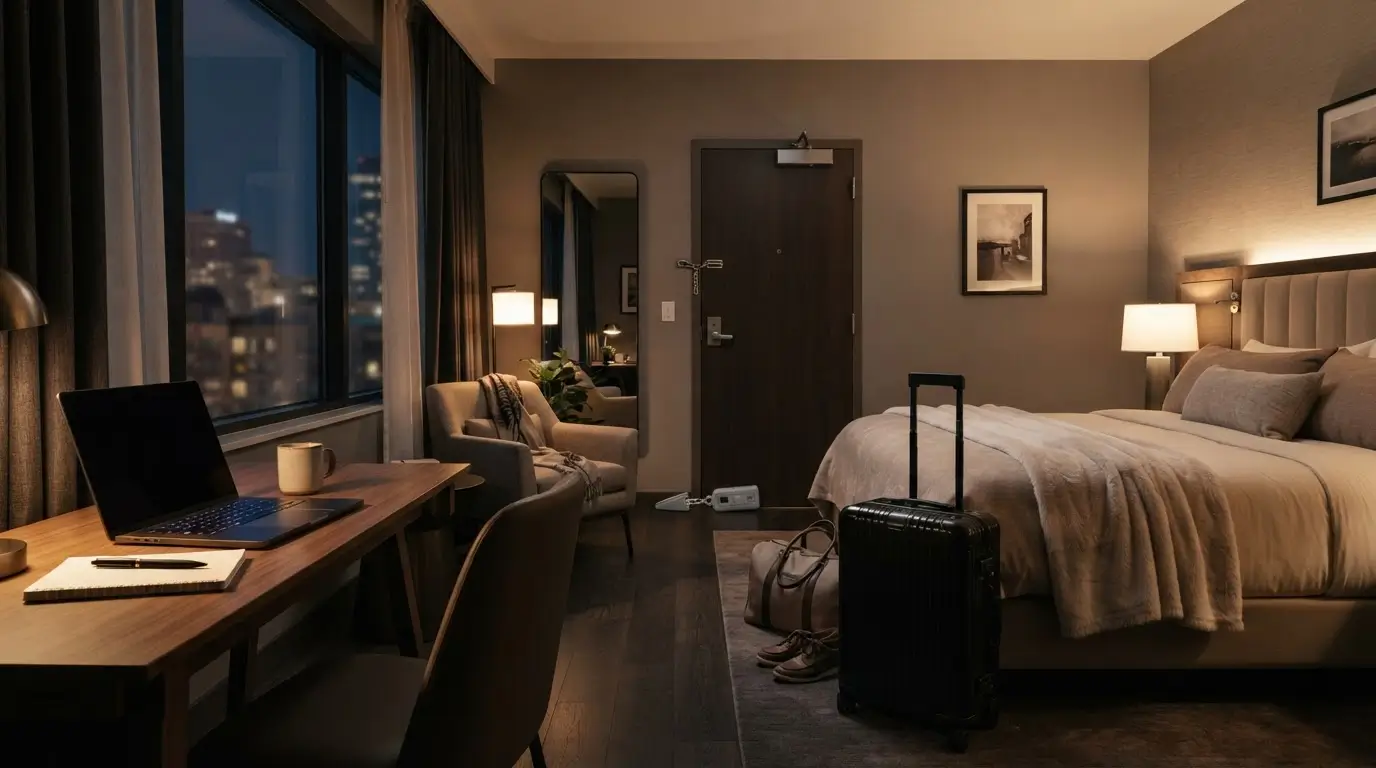
A doorstop alarm: for solo female travelers, the hotel room door is one of the most overlooked security points. A doorstop alarm wedged under your door prevents it from opening from outside and sounds an alarm if pressure is applied. Costs $10. Works in every accommodation type.
AirTags or Tile trackers placed inside checked luggage, your main bag, and your passport holder give you location data on your belongings at all times and evidence for airline damage or theft claims.
Offline maps downloaded before arrival: Maps.me and Google Maps offline give you full navigation capability without data or Wi-Fi, eliminating the visibility problem of a confused tourist staring at a phone screen in an unfamiliar area trying to get signal.
6. Handle Money in a Way That Doesn’t Make You a Target
Visible wealth is a safety issue as much as a financial one, and the behaviors that make you visually identifiable as a tourist carrying cash and cards are worth examining and changing before you leave home. This is not about being paranoid. It is about being unremarkable.
Split your money across multiple locations on your body and in your bag. Never keep your entire travel budget in one place. A money belt worn under clothing carries your passport, backup card, and emergency cash in a location that isn’t accessible to a grab-and-run. Your main wallet, carried in a bag or pocket, holds only what you need for the day. Anti-theft bags from brands like Travelon or Pacsafe have locking zippers, slash-proof straps, and RFID-blocking pockets that address the most common theft vectors without looking like security equipment.
At ATMs, use machines attached to bank buildings during daylight hours rather than standalone machines on quiet streets. Cover the keypad when entering your PIN. This is basic advice that most travelers know and fewer actually practice consistently. Practice it consistently.
7. Navigate Accommodation Safety Strategically
Where you sleep is the foundation of every solo female travel experience, and choosing and using accommodation with safety as an active consideration rather than an afterthought changes your experience significantly. This doesn’t mean defaulting to the most expensive option. It means making deliberate choices within whatever budget you’re working with.
When choosing accommodation:
Read reviews specifically written by solo female travelers rather than general reviews. A hotel that scores well overall may have specific issues that solo female guests consistently mention and that would never appear in a family’s review. Search the property name plus “solo female” on Google and TripAdvisor before booking.
Choose a room above the ground floor. Ground floor rooms with windows or doors accessible from outside present obvious vulnerability that upper floors don’t.
Avoid sharing your room number publicly. If someone asks which room you’re in at the hotel bar or in a hostel common room, the correct answer is a vague one. Staff can contact you. Other guests don’t need that information.
Use the additional security tools available. The doorstop alarm mentioned above. The chain lock on hotel doors. The privacy setting on hostel lockers. These features exist for a reason and using them is standard practice, not excessive caution.
8. Dress With Awareness, Not Anxiety
The conversation around how solo female travelers dress in conservative or unfamiliar cultures is genuinely complicated and worth engaging with honestly rather than dismissing in either direction. The reality sits somewhere between “dress however you want, it makes no difference” and “cover yourself completely to avoid all unwanted attention,” and finding it requires destination-specific research rather than a universal rule.
In destinations where local women dress conservatively, dressing in a way that reflects basic cultural awareness reduces unwanted attention and shows respect for local norms simultaneously. This is not capitulation to harassment culture. It is pragmatic navigation of a specific environment that makes your trip easier without requiring any meaningful sacrifice. Carrying a light scarf or sarong covers this requirement in virtually every conservative destination and takes up almost no space in any bag.
In destinations without conservative dress norms, dress for your own comfort and practical needs. Clothing that lets you move freely, blend in reasonably, and not signal expensive wealth is the practical framework. Flash-pack jewelry, designer visible logos, and obviously expensive cameras worn openly in crowded areas invite attention regardless of destination or culture. Leaving them at home or keeping them covered in transit is a simple adjustment with a real payoff.
9. Build a Social Network Without Compromising Your Safety
Solo travel is not the same as lonely travel, and one of the most common surprises for first-time solo female travelers is how naturally social it becomes when you stop expecting it to feel isolating. The challenge is building genuine connections with other travelers and locals in ways that don’t compromise your judgment or your physical safety.
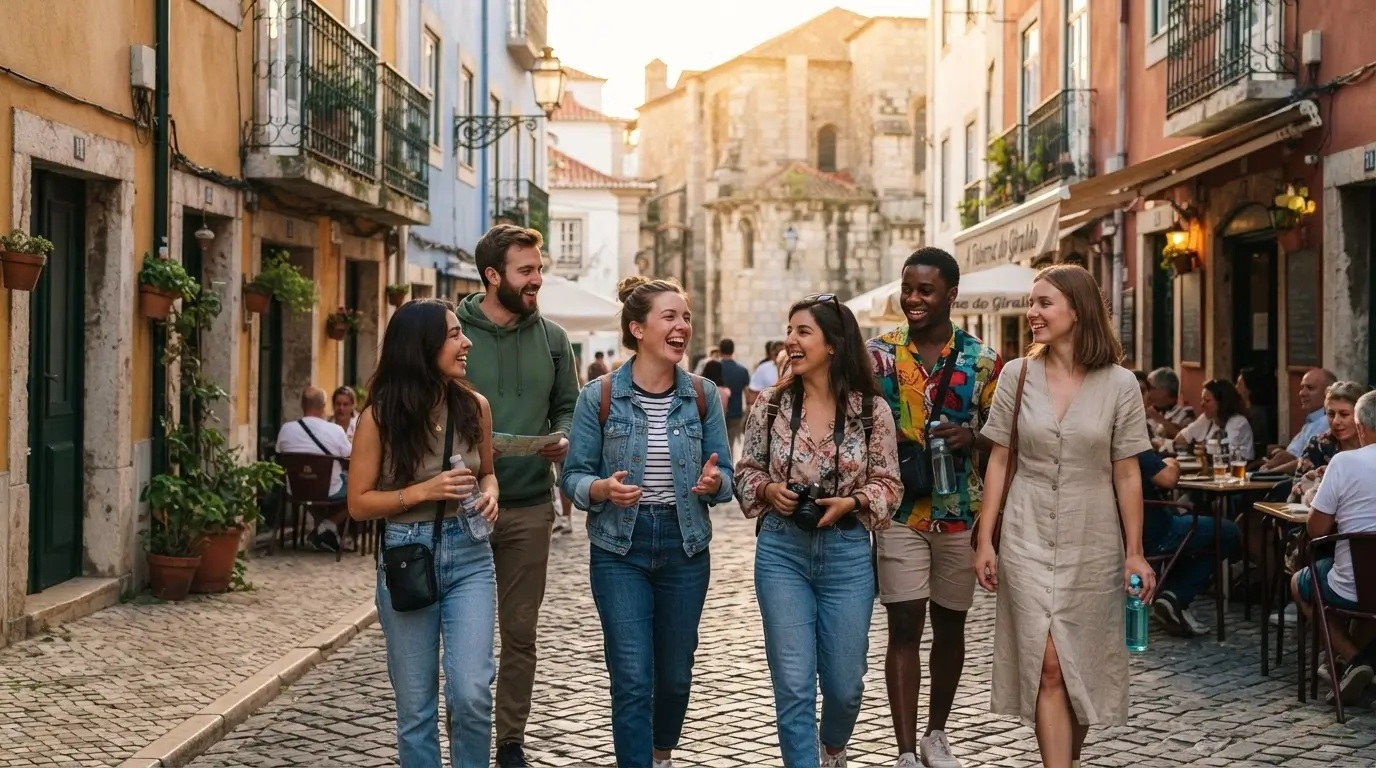
Free walking tours are one of the best social tools available to solo female travelers. They run in almost every major city, attract a good mix of other independent travelers, last two to three hours with natural conversation built in, and give you a small group context that’s easy to navigate without any ongoing social obligation. You meet people, see the city, and leave without anyone knowing where you’re staying or what your plans are.
Hostel common rooms in female-only dorms or well-reviewed social hostels generate organic connections without the commitment of planned group activities. The Hostelworld rating system specifically highlights social atmosphere, so you can choose environments that match your desired level of interaction.
Meeting locals through platforms like Couchsurfing’s Hangouts feature or Meetup events gives you access to genuine local knowledge and real connection, but always meet in public places initially, tell someone where you’re going and who you’re meeting, and trust your instincts the same way you would in any new social situation at home.
10. Manage Your Digital Safety With the Same Attention as Your Physical Safety
Digital safety for solo female travelers is an under-discussed dimension of travel security that gets significantly less attention than physical safety despite creating equally real vulnerabilities. Your phone contains your accommodation details, your financial information, your location history, your communication with people at home, and your identity documents. Treating its security casually is a genuine risk.
Before every trip:
Enable two-factor authentication on every account that holds sensitive information. Banking, email, accommodation bookings, and social media all qualify.
Set a strong phone PIN rather than a fingerprint or face unlock that can be compelled more easily in a theft situation. Six digits minimum.
Back up your phone to cloud storage before leaving. If your phone is stolen, having cloud access to your photos, contacts, and documents from any device prevents a theft from becoming a catastrophe.
On social media, post location information with a delay rather than in real time. Sharing that you’re currently at a specific location tells anyone paying attention that your accommodation is currently unoccupied and that you’re alone in a specific place. Posting the beautiful café photo the evening after you visited it achieves everything you want from the post without that specific risk.
Destination-Specific Tips for the Most Popular Solo Female Travel Routes
Solo female travel looks different in practice depending on where you’re going, and some route-specific guidance covers gaps that general tips can’t address.
Southeast Asia Solo Female Travel
Southeast Asia is one of the most popular solo female travel regions in the world, and for good reason. It’s affordable, welcoming, and rich with culture, food, and landscape diversity. The practical considerations specific to this region include dressing modestly at temples, being aware of tuk-tuk and taxi scams that specifically target solo female travelers, and understanding that “no” communicated clearly and without extended negotiation is the most effective response to persistent vendors or touts. Vietnam, Thailand, and Bali all have strong solo female traveler communities and excellent hostel networks.
South America Solo Female Travel
South America requires more destination-specific research than most travel content suggests. Cities like Medellín, Cartagena, and Buenos Aires are popular and manageable with standard precautions. Others require more careful navigation. Street harassment is more prevalent in some South American countries than in Southeast Asia or Europe, and having a clear, practiced response to it, ignoring without acknowledgment, moving toward populated areas, entering a shop rather than continuing down a quiet street, is worth developing before you arrive rather than figuring out in the moment.
Middle East Solo Female Travel
Jordan is consistently cited as the most solo female traveler-friendly destination in the Middle East and genuinely delivers on that reputation. Petra, Wadi Rum, and the Dead Sea are all accessible and extraordinary. Morocco in North Africa offers similar complexity to the broader region, where solo female travelers who dress appropriately, move confidently, and stay in well-reviewed medina riads have wonderful experiences, while those who navigate it without preparation find the persistent attention in souks and medinas more draining than anticipated.
Frequently Asked Questions
What are the safest destinations for solo female travelers in 2025?
Iceland, Japan, Portugal, New Zealand, and Ireland consistently top safety rankings for solo female travelers based on low crime rates, low street harassment culture, strong English infrastructure, and traveler feedback from women specifically. Within Asia, Taiwan and Singapore are exceptionally safe. Within South America, Uruguay and Chile rank highest for solo female safety. Within the Middle East, Jordan stands alone as the most accessible and safe destination for solo female travelers.
How do solo female travelers handle unwanted attention from men abroad?
The most effective approach varies by culture and context, but confident, non-reactive dismissal works in most situations. Avoiding eye contact, not engaging with verbal approaches, and moving toward populated areas or into a shop removes you from the situation without escalating it. In cultures where ignoring is interpreted as encouragement, a firm and direct “no” without a smile and without explanation is more effective. Wearing headphones, real or not, creates a social barrier that reduces unsolicited approaches significantly in most environments.
Is solo female travel safe in your 50s and 60s?
Absolutely, and many women report that older solo travel carries social advantages that younger travelers don’t have. Older solo female travelers receive less unwanted romantic attention in most cultures, are often treated with more automatic respect by locals, and bring enough life experience to navigate unexpected situations with genuine calm rather than performed calm. Practical considerations include travel insurance that covers pre-existing conditions, accommodation that prioritizes comfort over price, and pacing that allows genuine rest rather than optimizing every day for activity volume.
What should solo female travelers do if they feel unsafe in a specific situation?
Move first, analyze later. Walk into any open business, restaurant, hotel lobby, or populated area. Tell someone at the nearest establishment that you feel unsafe and ask to wait inside. Contact your accommodation or a trusted contact. If you believe you’re being followed, change direction unpredictably multiple times, enter a busy shop, and ask staff to call you a taxi directly rather than walking to find one. In genuine emergencies, make noise, attract attention, and use your personal alarm without hesitation.
How do solo female travelers meet other people without compromising safety?
Free walking tours, hostel common rooms, day tours and cooking classes, language exchange events, and coworking spaces all create organic social connections in low-risk environments. Always meet new people in public places initially. Share your plans for a specific outing rather than your accommodation details. Trust the same instincts you use at home when assessing new people, your judgment about character doesn’t stop working just because you’re in a different country.
Conclusion
Solo female travel is not an act of bravery. It is an act of deciding that your curiosity and your life are worth the effort of a little preparation and a first step that feels bigger than it actually is. Every woman on every solo trip before you felt what you’re feeling right now, and almost all of them boarded the plane anyway. Where are you going first?